If you've been faithfully reading Spanish books to your child — but they still refuse to speak Spanish back to you — you might be wondering if any of this is actually sinking in.
Short answer: Yes. It is.
Bilingual language development doesn't happen overnight. And it rarely happens the way we expect.
There are no dramatic "aha!" moments. No sudden fluency. No trophy for "Most Bilingual Kid at Preschool."
Instead, there are quiet, easy-to-miss signals that your child's brain is doing exactly what it needs to do to become biliterate.
Here are 5 science-backed signs that your bilingual journey is working — even when it doesn't feel like it.
1. 🎵 They Hum or Sing Spanish Songs When They Think You're Not Listening
You catch your child in their room singing "La Vaca Lola" to their stuffed animals. Or humming the refrain from Elefante while they color.
Why it matters: Music bypasses self-consciousness and goes straight to memory. When kids internalize songs and rhymes from Spanish books, they're absorbing pronunciation, rhythm, and vocabulary — effortlessly.
What to do:
- Keep reading books with repetitive, rhythmic text
- Play Spanish songs during transitions (morning routine, car rides, bath time)
- Don't ask them to "perform" — just notice these private moments of language play
2. 👂 They Understand WAY More Spanish Than They Speak
Your child follows Spanish instructions perfectly ("Tráeme tus zapatos"). They laugh at the right moments during storytime. They clearly understand you — but they answer in English.
Why it matters: This is called receptive bilingualism, and it's a completely normal (and necessary!) stage of language development. Comprehension always comes before production. Your child's brain is building a strong foundation — the speaking will come later.
What to do:
- Keep speaking Spanish, even if they respond in English (they're still learning!)
- Ask yes/no questions or give choices in Spanish to reduce pressure
- Celebrate comprehension: "I love that you knew exactly what I was asking for!"
Get libros your child will ask for again & again.
Cancel anytime. We'll swap any book you already own.
3. 🗣️ They Code-Switch (That "Spanglish" Is Actually a Good Sign)
Your niño says things like "Mommy, quiero more agua" or "I need mis zapatos." They mix Spanish and English without even thinking about it.
Why it matters: Code-switching isn't confusion — it's a sign of cognitive flexibility. Research shows that kids who mix languages are demonstrating sophisticated awareness of both languages. It's a feature, not a bug.
What to do:
- Never scold or shame them for mixing languages
- Respond naturally in full Spanish: "Ah, ¿quieres más agua? Here you go!"
- Recognize that code-switching is culturally normal in bilingual households
4. 📖 They Ask What Spanish Words Mean
Mid-conversation (or mid-story), your child asks: "What does 'mariposa' mean?" or "Why does the book say 'luna'?"
Why it matters: Curiosity = engagement. When kids start asking about words, their brain is moving from passive exposure to active learning. They're making connections between Spanish sounds and meaning — which is exactly how literacy develops.
What to do:
- Answer enthusiastically (but keep it simple)
- Use visuals: point to pictures or real objects
- Turn it into a game: "Let's find three mariposas in this book!"
5. 💬 They Use Spanish Words to Express Specific Emotions
Your child says "¡Ay!" when startled. They call you "mami" in tender moments. They say "¡Qué rico!" when something tastes delicious, even though you didn't explicitly teach them that phrase.
Why it matters: This is the gold standard of language learning. When kids start using Spanish to express genuine feelings, it means the language has moved from their head to their heart. It's become part of their identity.
What to do:
- Notice and celebrate these moments (without making a big deal that disrupts the flow)
- Model emotional language in Spanish: "Estoy tan feliz" / "¿Estás cansado?"
- Read books that explore feelings and emotions in Spanish
What If My Child Isn't Showing These Signs Yet?
First: Don't panic.
Many bilingual kids go through a "silent period" that can last months or even years. During this time, they may:
- Understand everything but refuse to speak Spanish
- Prefer English books and media
- Seem completely disengaged
But here's what research tells us: Their brains are still working. They're listening, absorbing, and building the neural pathways they'll need for fluency later.
The crucial thing is this: Keep going.
If you stop reading Spanish books or speaking Spanish because your child seems "not interested," you cut off the very exposure they need to eventually produce the language.
The One Thing Every Bilingual Parent Needs to Remember
Consistency matters more than perfection.
You don't need hours of Spanish instruction. You don't need to be perfectly fluent. You don't need expensive programs or fancy apps.
What you need is one Spanish book a day.
Just one cuento before bed. One story over breakfast. One book in the diaper bag for the pediatrician's waiting room.
That's 365 books a year. ~7,000+ Spanish words absorbed naturally through stories your child loves.
Over the course of childhood? Tens of thousands of words. Hundreds of hours of exposure. A bilingual brain built one page at a time.
So if you've been doubting yourself — don't.
Every Spanish story you read, every song you sing, every buenos días you offer is working.
Even when it doesn't feel like it.
We're Here to Help You Keep Going
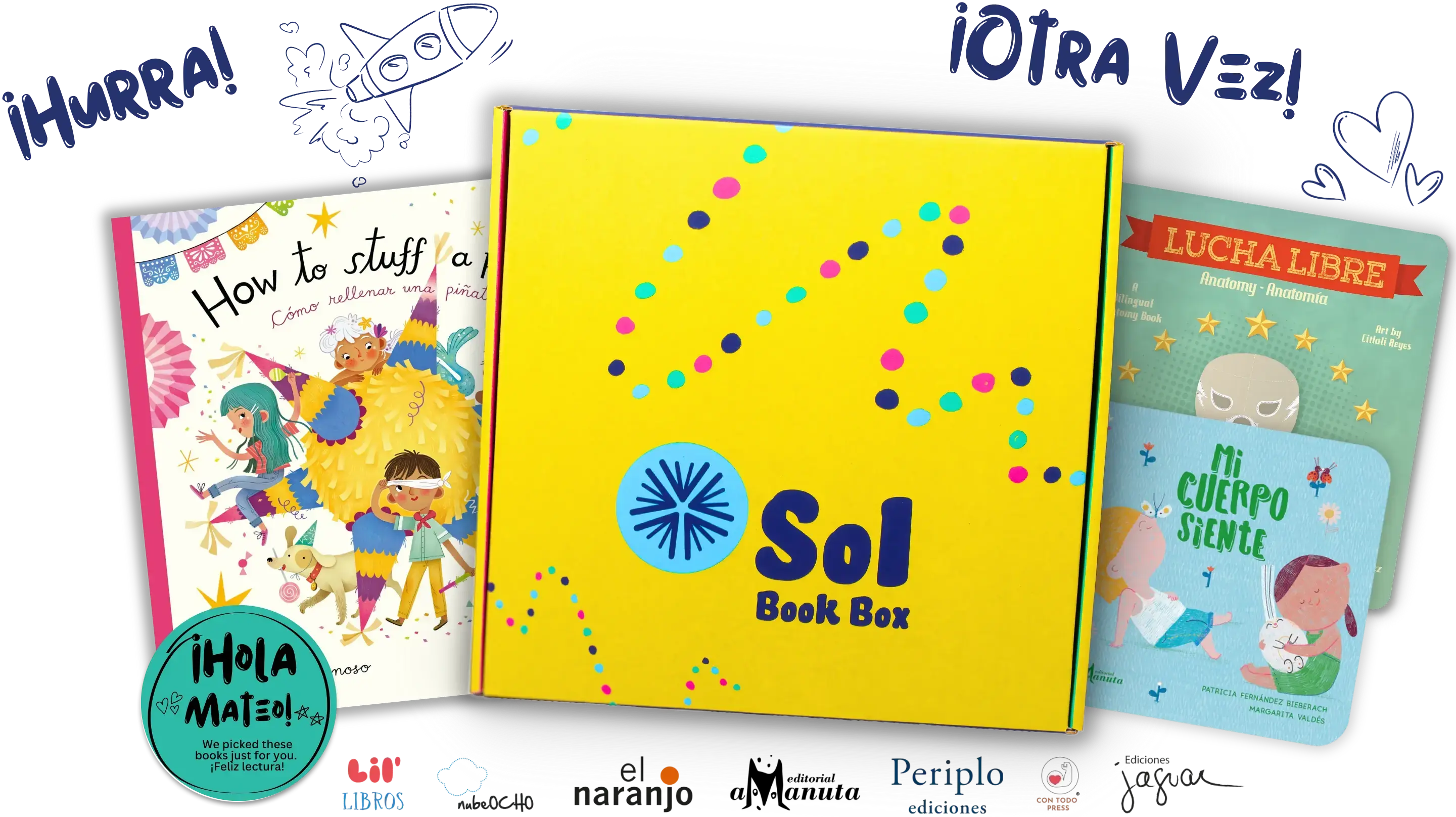
At Sol Book Box, we know that raising bilingual readers takes patience, consistency, and access to authentic, high-quality Spanish books — the kind that are hard to find in most U.S. bookstores.
That's why we curate every box with care, selecting stories that:
✨ Feature rich, authentic Spanish (not just translations)
✨ Represent diverse Latin American and Spanish cultures
✨ Spark joy, curiosity, and emotional connection
✨ Work for a range of ages and reading levels
Every month. Age-appropriate. Expertly curated. Ready to read.