When parents choose Spanish books for their kids, the most common instinct is: find something at their level. Simple vocabulary. Short sentences. Heavy repetition. A book they can mostly understand.
We get it. It feels like the right call. But after years of curating Spanish and bilingual children's books, we've come to believe that instinct is quietly slowing your child's language development — and that the books most parents overlook are often the ones that do the most work.
The case for one step ahead
Language acquisition researchers have long understood that we don't learn language by consuming what we already know. We learn by being exposed to input that is just slightly beyond our current level — familiar enough to follow, challenging enough to stretch. Not so hard it loses us, not so easy it requires nothing of us.
For bilingual families, this has a specific implication. The Spanish board book that your toddler can "read" independently, the one with four words per page they already know — that book is comfortable. But comfort and acquisition aren't the same thing. The book that pulls them forward is the one where the story is compelling enough that they stay engaged even when they don't catch every word. Where the illustrations are rich enough to carry the meaning. Where the language washes over them and slowly, in ways they won't even notice, starts to stick.
This is the book most parents walk past at the library. It looks too hard. It has too many words, or vocabulary that seems advanced, or a story with more emotional complexity than they expect at that age. They put it back and reach for something simpler. We'd like to make the case for reaching a little further.
Get libros your child will ask for again & again.
Reserve your boxCancel anytime. We'll swap any book you already own.
What makes the slightly-too-hard book work
Not every difficult book is the right kind of difficult. A book that overwhelms without rewarding won't hold a child's attention regardless of how linguistically valuable it might be. The books that work — the ones we look for when we're curating — have a specific combination of qualities.
The illustrations tell the story independently. A child who misses vocabulary is still following the narrative through pictures that carry emotional truth and visual detail. The story has enough pull that the child wants to hear it again. Repetition is how language sticks, and a book worth reading a hundred times gives the language a hundred chances to land. And the language itself has rhythm — something in the sentence structure or cadence that makes it pleasurable to hear out loud even before every word is understood.
Four books to check out:
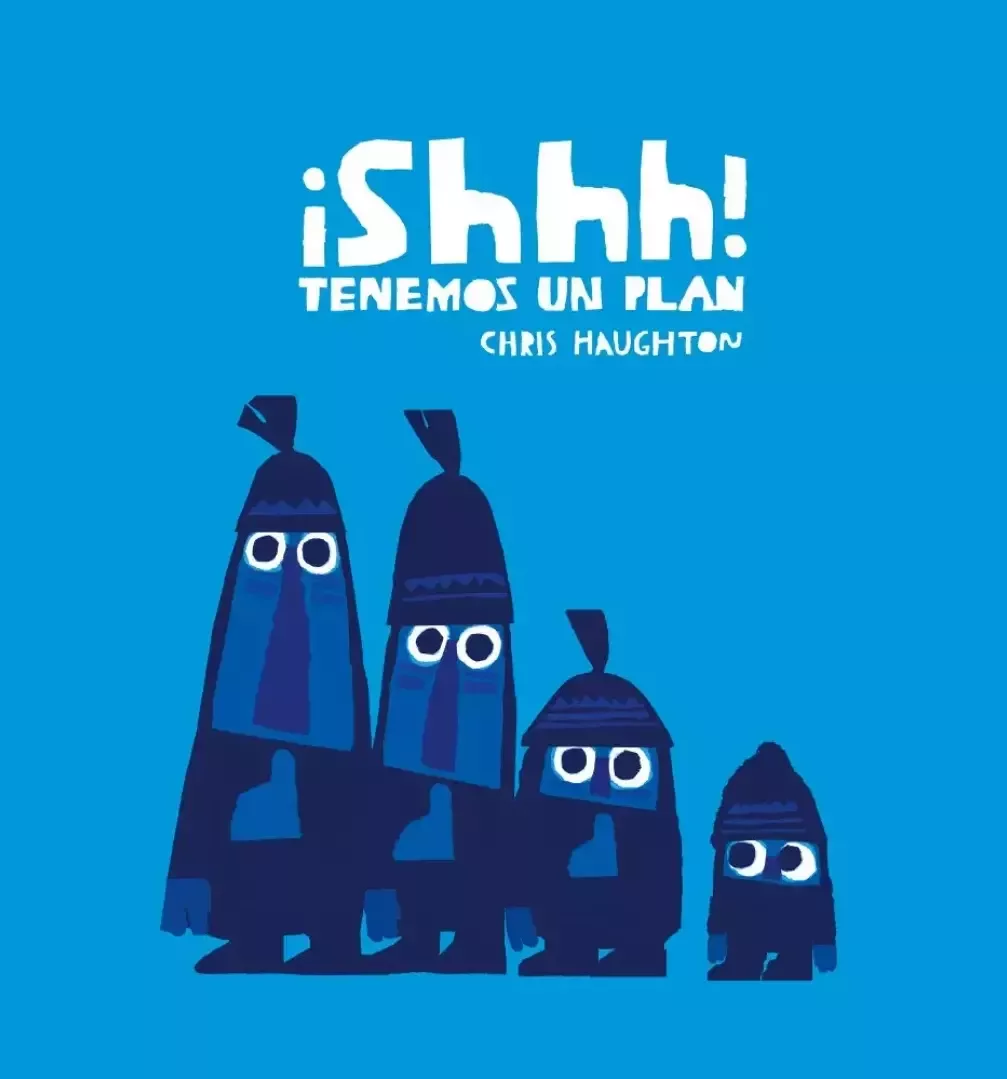
Shhh! Tenemos un Plan (Chris Haughton) — Board book
Four figures set out through the woods with a plan to catch a bright pink bird. The three larger ones keep shushing the smallest, who keeps saying hello to everything they're trying to catch. The refrain — "Shhh. Tenemos un plan" — repeats with comedic precision until the plan collapses spectacularly, and the smallest one's instinct turns out to be right all along.
The vocabulary here isn't simple, and the circular narrative structure is more sophisticated than most parents would expect from a board book. But none of that matters, because Haughton's illustrations are so expressively funny that a child missing half the words is still following every beat of the story.
The slapstick lands completely in pictures. The Spanish is the layer they're absorbing while they laugh. We've seen this one requested again and again.
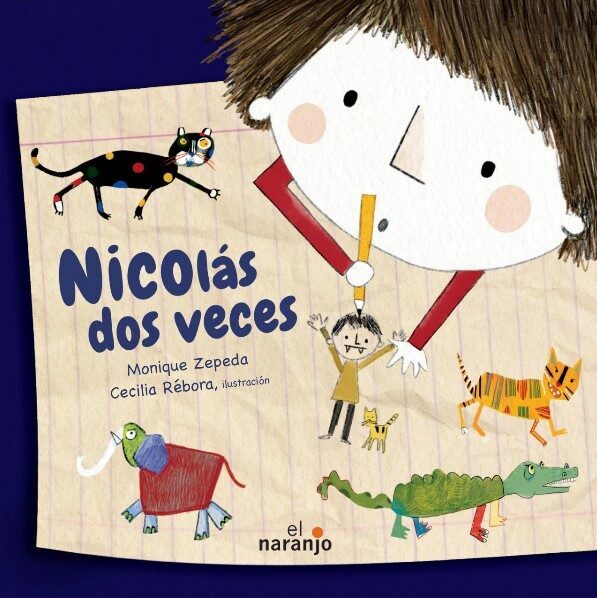
Nicolás dos veces (Monique Zepeda, illustrated by Cecilia Rébora) — Board book
Most board books are noun inventories with pictures. This one is a story. Nicolás draws fiercely scary animals during the day, then at night they escape his drawings and he can't sleep. His mother helps him see that the same imagination that made them terrifying can make them silly, colorful, manageable — tigers filled with confetti, panthers dancing.
He discovers he was never afraid of the animals. He was afraid of what his own mind could conjure, and his own mind can conjure something different.
That is a picture book's emotional architecture. It's in a board book. We put it in our boxes for very young children and watch parents do a double take when they read it.
If you think this format is too young for a story that rich, that's exactly the point.
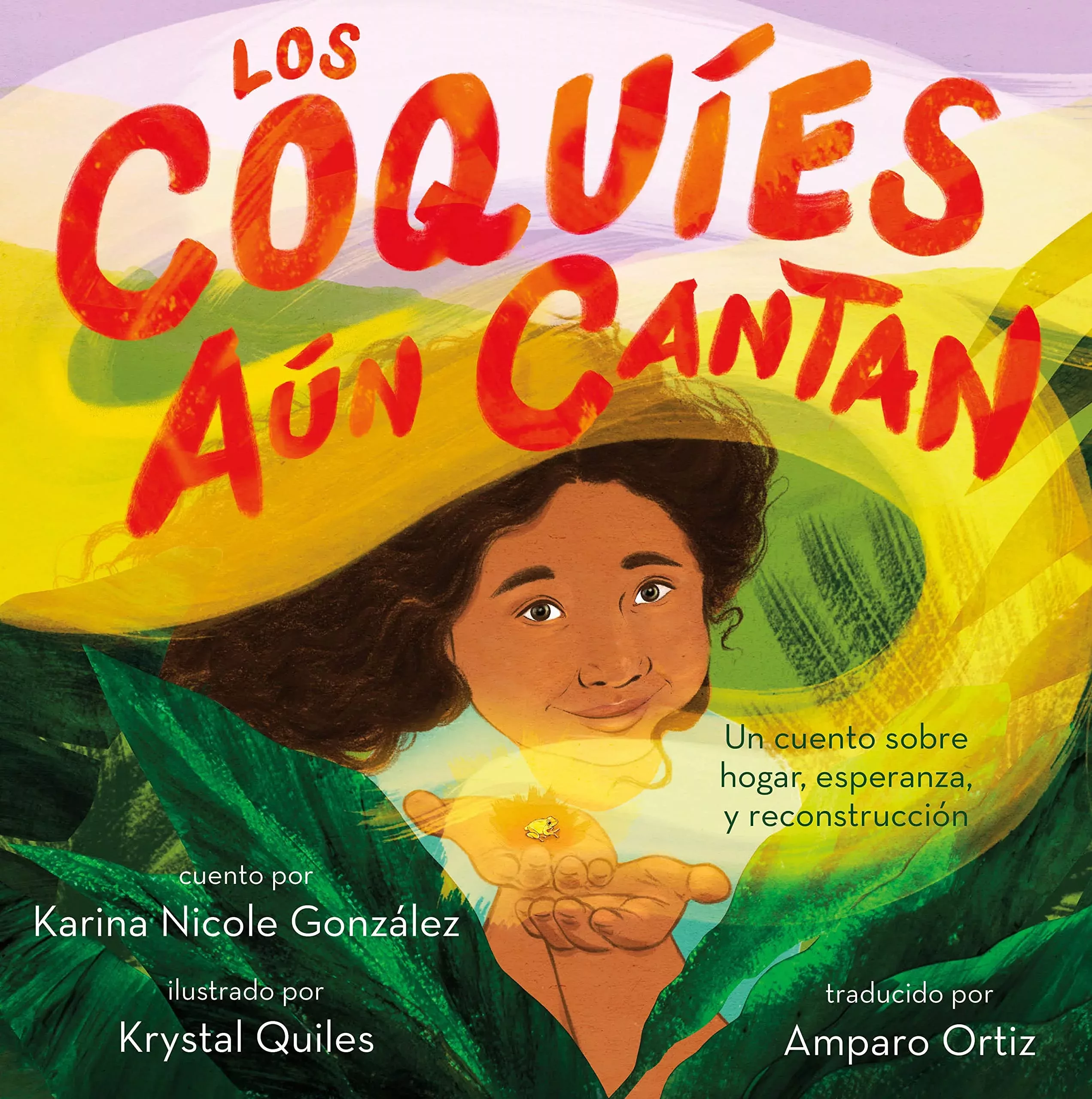
Los coquíes aún cantan (Karina Nicole González, illustrated by Krystal Quiles) — Picture book
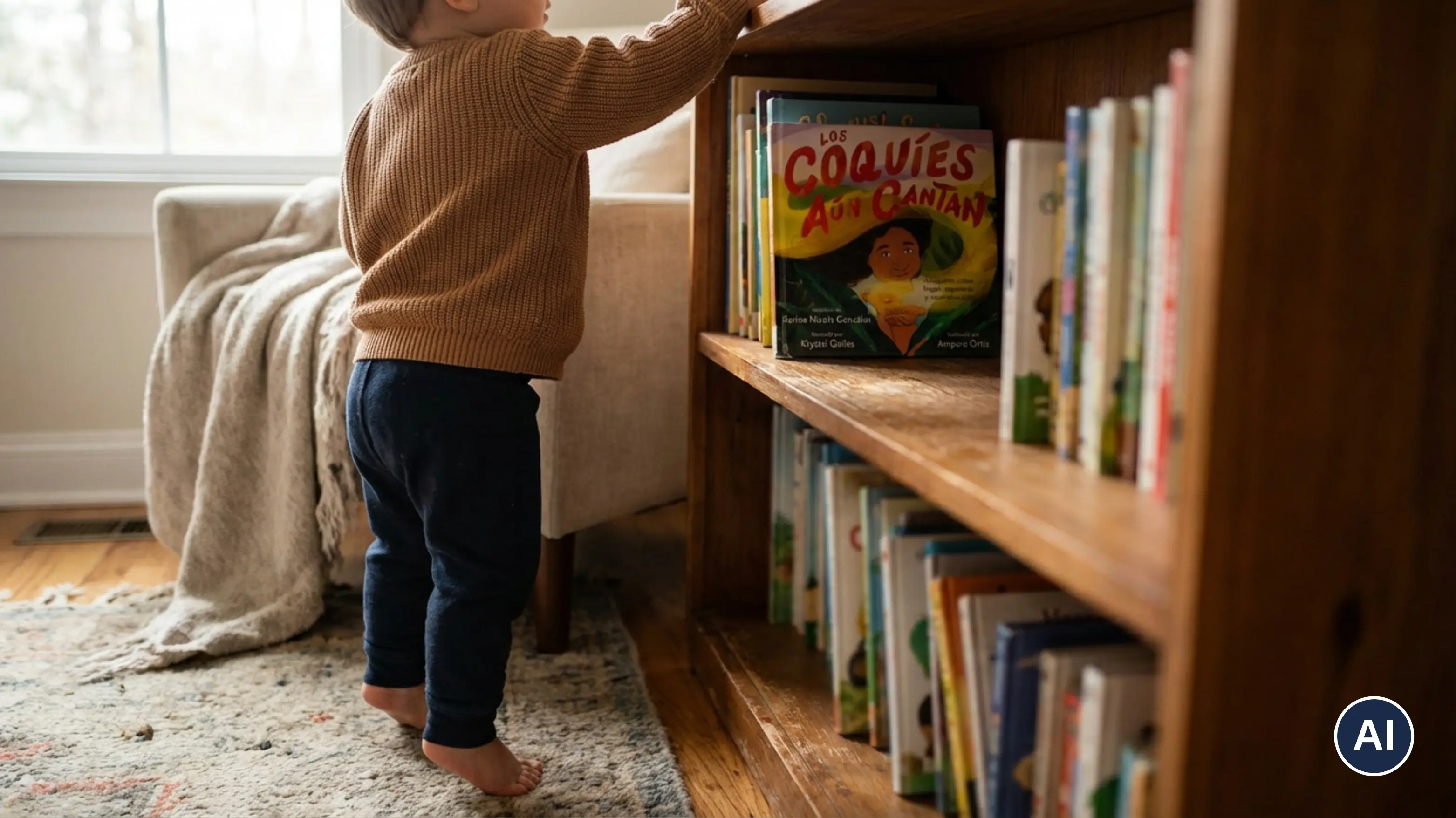
This is the hardest book on this list, and it's here because it earns every word. A Pura Belpré Honor book written in lyrical Spanish — based on the author's abuela's experience living through Hurricane María — it follows a young girl named Elena as a hurricane tears through her island, silences the coquí frogs she loves, and eventually gives way to the slow, community-led work of rebuilding.
The vocabulary is rich. The themes are complex. Most parents of young children would hesitate. But Krystal Quiles's gouache illustrations are so vibrant and emotionally complete that the story lands with full weight even when individual words go past.
What a child absorbs from this book — the lyrical rhythm of the Spanish, the vocabulary of home and loss and hope, the sound of the language at its most beautiful — stays with them. This is the book they'll remember. We included it in our boxes because we believe that, and because Spanish-language literature for children doesn't get much better than this.
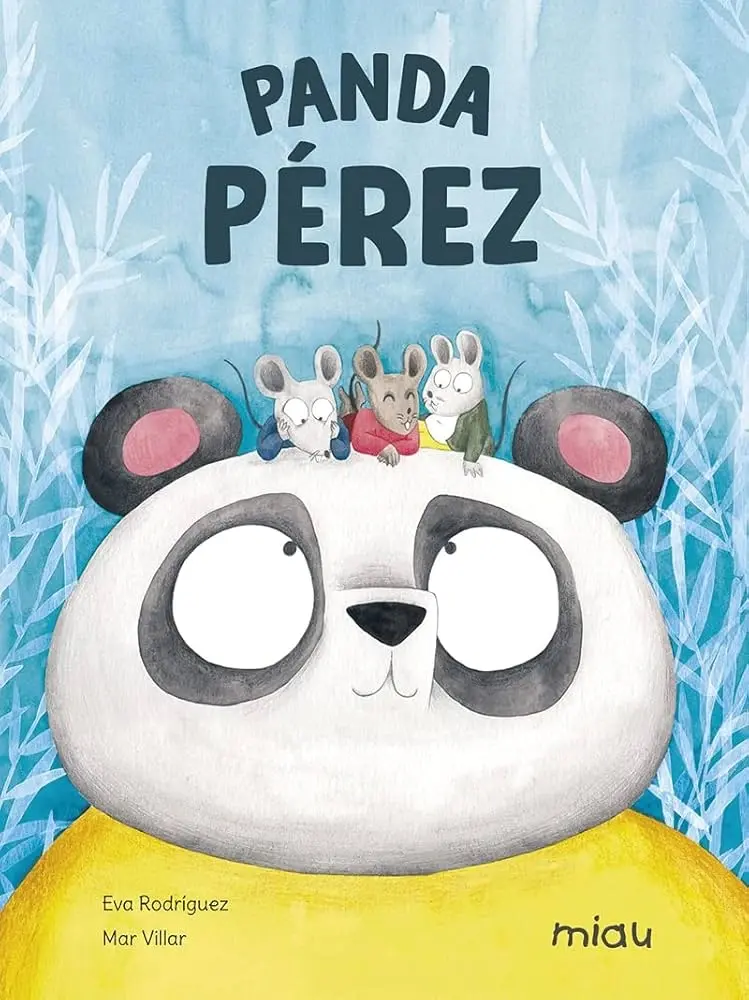
Panda Pérez (Eva Rodríguez Juanes, illustrated by Mar Villar) — Picture book
A panda with an unusual dream: to become El Ratón Pérez — the folkloric tooth collector beloved across Latin America and Spain. The path there involves karate classes, yoga, somersaults, and spectacular failure, all rendered in slapstick comedy and illustrations so vibrant they're practically kinetic.
For families already familiar with El Ratoncito Pérez, this book is an instant favorite — a comedic spin on a character they know.
For families discovering the tradition for the first time, it's doing two things at once: telling a genuinely funny story about persistence, and quietly introducing a piece of cultural lore that lives in the Spanish-speaking world in the same way the Tooth Fairy lives in English.
Both are the slightly-too-hard book. Both leave children with more than they started with.
One last thought
The best Spanish book for your child is probably slightly too hard. That's not a reason to put it back on the shelf. It's a reason to open it tonight. ¡Feliz lectura!