Spanish has somewhere between 20 and 30 recognized dialects, and speakers of all of them can understand each other. The differences sit in pronunciation, vocabulary, and a handful of grammar patterns, not in the core of the language. For a family raising a bilingual child, that means the variety of Spanish in your house matters far less than how much of it your child hears.
Quick answers
- Most sources put the number of Spanish dialects between 20 and 30, though the count depends on how they're grouped.
- The major ones are Castilian (Spain), Mexican, Central American, Caribbean, Andean, and Rioplatense (Argentina and Uruguay).
- A dialect differs from a language by mutual understanding: speakers of different Spanish dialects can understand one another, which is what keeps them dialects.
- The three areas that vary are pronunciation, vocabulary, and a few grammar patterns — notably vosotros in Spain and vos in parts of Latin America.
- Mexican Spanish is the most commonly heard dialect in the United States, followed by Caribbean and Central American varieties.
- There is no single best dialect for a child to learn. Exposure and consistency matter more than which variety.
On this page
- Differences and similarities
- Why learn different types of Spanish?
- Spanish words with Arabic roots
- Spanish dialects you'll hear in the U.S.
- Spanish dialect FAQs
“A different language is a different vision of life.”
-Federico Fellini
Did you know that Spanish began as a dialect spoken by a tribe of cattle farmers on the Iberian peninsula? Now it’s spoken by at least 500 million people and 21 countries (22 if you include the United States’ 41 million Spanish speakers). Yet within those figures there lies a curious characteristic: there are different types of Spanish. This is something that most native Spanish speakers come to realize and accept fairly quickly.
In my native Miami, because we have such a rich and diverse Spanish speaking population (Miami has been called “the capital of Latin America”) it’s common to borrow vocabulary and sometimes even accents (unintentionally) from Spanish speakers from other countries. The beauty of Spanish is that no matter where you’re from, be it Spain, the mother country of the Spanish language, Argentina, the land of the asado and tango, or la isla of Cuba, home of the Cuban cafecito and Celia Cruz, we can all communicate with each other. Let's take a look at just how that is.
Differences and Similarities
According to linguists, “two languages where speakers can understand each other are considered dialects of the same language, whereas two languages where the speakers cannot understand each other are, indeed, separate languages.” It is difficult to determine exactly how many dialects of Spanish exist, as different sources provide different estimates. However, it is generally agreed that there are numerous dialects of Spanish, which vary based on geographic, historical, and cultural factors.
Some sources estimate that there are between 20 and 30 distinct dialects of Spanish, while others suggest that the number is much lower or higher. The number of dialects can also vary depending on how they are classified, as some dialects may be grouped together as part of a broader regional variety. Some of the major dialects of Spanish include Castilian Spanish (spoken in Spain), Mexican Spanish, Central American Spanish, Caribbean Spanish, Andean Spanish, and Rioplatense Spanish (spoken in Argentina and Uruguay). Each of these dialects has its own unique characteristics in terms of pronunciation, vocabulary, and grammar.
Differences
- Pronunciation. One of the most notable differences between Spanish dialects is in pronunciation. For example, Spanish from Spain has a more "lispy" sound, with the "s" and "c" sounds being pronounced differently than in Latin American Spanish.
- Vocabulary. Different Spanish dialects use different words and expressions, and some words may have different meanings in different parts of the world. For example, in Spain, "coche" is used to refer to a car, while in Latin America, "carro" is more commonly used.
-
Grammar. While the basic grammar of Spanish remains the same across all dialects, there are some minor differences in grammar and syntax. For example, in some parts of Latin America, the personal pronoun "vos" is used instead of "tú" to mean "you." Similarly in Spain the pronouns “vosotros” and “ustedes” are used instead of “tú,” which as a result means the verb ending also changes. For example:
- Spain: Vosotros habláis muy rápido – You guys speak very fast.
- Latin America: Ustedes hablan muy rápido – You guys speak very fast.
Luckily, these variations are systemic and easy to note. Quick tip: have a look at the copyright page or author bio to learn where a writer is from. This will help you begin to notice the differences and similarities of Spanish dialects.
Similarities
- Core grammar. While there are some minor differences in grammar and syntax, the core grammar of Spanish remains mostly the same across all dialects. This means that speakers of different dialects can understand each other, even if there are some differences in vocabulary and pronunciation.
- Shared culture. Spanish is a language that is closely tied to culture and history. Despite the differences in dialects, there are many shared cultural traditions and customs that are celebrated across the Spanish-speaking world. For example, Los Tres Reyes Magos (also known as Epiphany) is a tradition that goes back to Spain and is also celebrated in Cuba.
- Written language. Written communication is generally easily understood across different dialects even if there are differences in pronunciation and vocabulary between Spanish dialects.
Why Learn Different Types of Spanish?
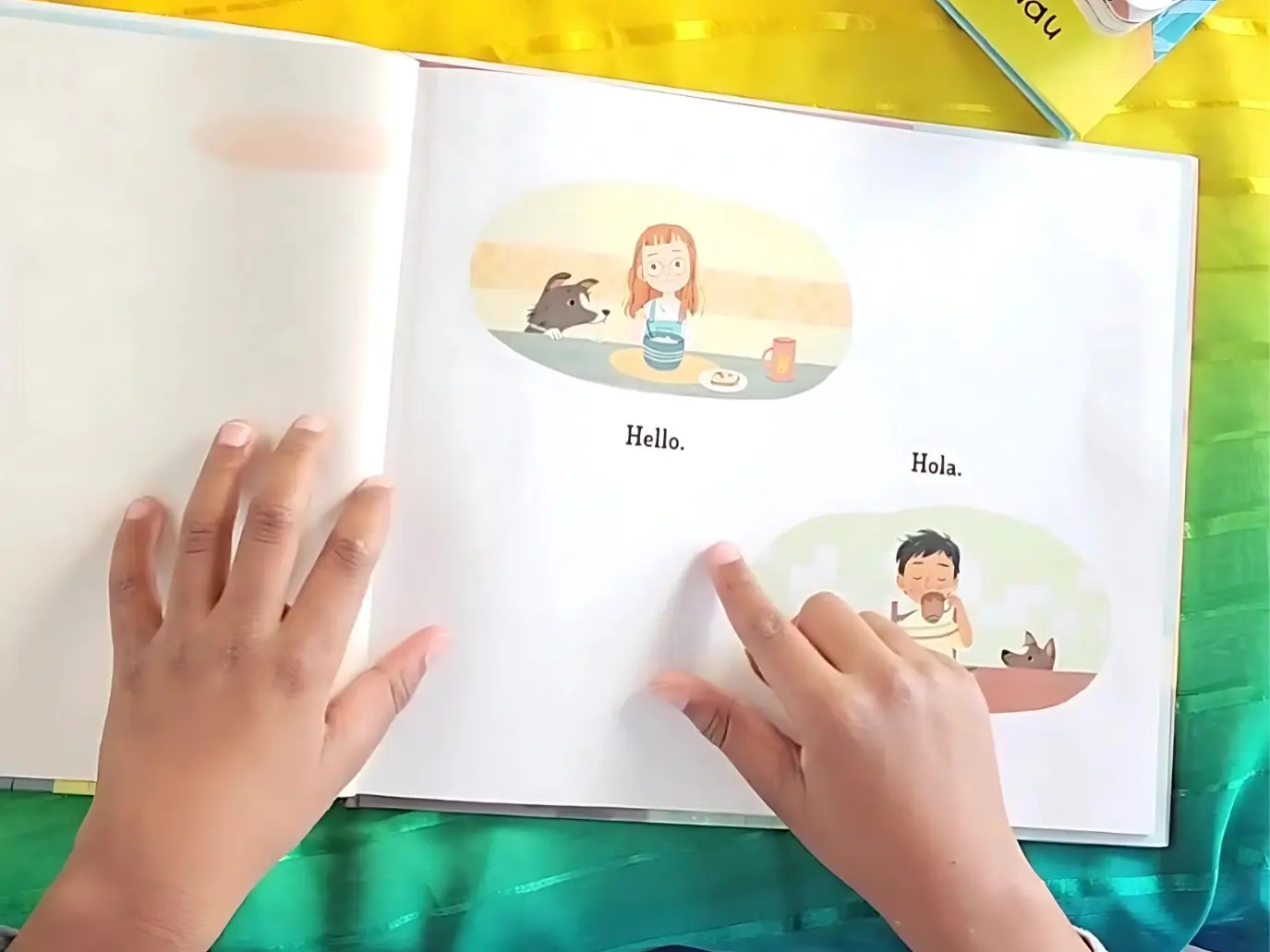
When it comes to raising bilingual children, exposing them to different forms of Spanish can be incredibly beneficial. You can begin by explaining that there are different dialects in Spanish because Spanish is spoken all over the world and different people have different needs for the language. This begins the conversation on language as a living entity, one that is constantly evolving and adapting to the needs of its speakers. It also shows children that there are a variety of ways to express yourself and that there isn’t a “right” way of speaking Spanish. This will help develop a deeper appreciation for the similarities and differences between different forms of Spanish while also expanding their vocabulary and understanding of grammar.
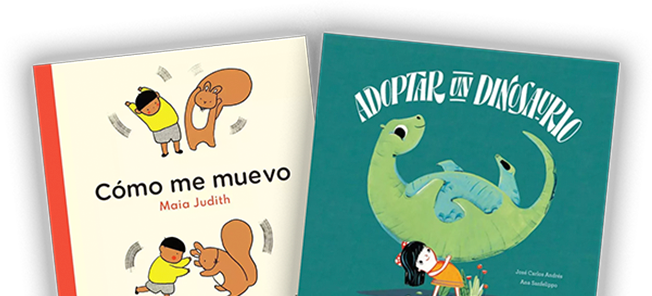
Give your child libros from across the Spanish-speaking world.
Cancel anytime. We'll swap any book you already own.
The easiest way to build that exposure is with books kids actually ask for again. These funny Spanish and bilingual picture books are a good place to start, and for younger readers our guide to choosing Spanish books for kindergarten covers formats and reading levels by stage.
Spanish Words with Arabic Roots
As children get older, you can explore the etymology of different words and even turn it into a history lesson, using language as the catalyst. They can learn to recognize the nuances in pronunciation and vocabulary while appreciating the cultural heritage behind each one. One of the richest threads to pull is the number of Spanish words with Arabic origins. Here are four to start with:
- Azúcar — from the Arabic al-sukkar (السكر). It means “sugar” in English.
- Arroz — meaning “rice,” developed from the Arabic aruzz (أرز).
- Limón — you can hear the similarity to the Arabic laymun (ليمون). It means “lemon.”
- Sandía — meaning “watermelon,” evolved from the Classical Arabic sindiyyah (سندية).
Spanish Dialects You’ll Hear in the U.S.
Spanish is the second most spoken language in the U.S., but not all Spanish sounds the same. Here are a few dialects your child is most likely to hear at school, on TV, or in your community:
- Mexican Spanish – The most common dialect in the U.S., especially in the Southwest and West Coast. Clear pronunciation and rich vocabulary make it great for learners.
- Caribbean Spanish – Includes dialects from Puerto Rico, the Dominican Republic, and Cuba. Often faster-paced and full of dropped consonants, and full of musical rhythm.
- Central American Spanish – Spoken by families from El Salvador, Guatemala, and Honduras. May include indigenous words and a mix of formal and informal phrasing.
- Bilingual and blended – In many U.S. homes, kids grow up hearing both English and Spanish, often switching between the two naturally (a.k.a. “Spanglish”).
If you want books that reflect that range, our reading list for Hispanic Heritage Month features eleven titles by authors from Mexico, Cuba, the Dominican Republic, Peru, and Argentina.
Spanish Dialect FAQs
What are the main dialects of Spanish?
The most widely recognized dialects include Castilian (Spain), Mexican, Caribbean, Central American, Andean, and Rioplatense (Argentina and Uruguay). Each has its own pronunciation, vocabulary, and cultural flavor.
How many dialects of Spanish are there?
Most sources put the number between 20 and 30, though estimates vary because dialects can be grouped either narrowly or as part of broader regional varieties. There is no official count.
What is the difference between a dialect and a language?
The working definition linguists use is mutual understanding. If speakers of two varieties can understand each other, those varieties are dialects of the same language. If they cannot, they are separate languages. Every Spanish dialect passes that test, which is why a speaker from Buenos Aires and a speaker from Madrid can hold a conversation.
What Spanish dialect is spoken in the U.S.?
Mexican Spanish is the most common in the U.S., especially in the West and Southwest. You’ll also find Caribbean and Central American dialects in places like New York, Florida, and the Mid-Atlantic.
Are Latin American and European Spanish different?
Yes, mostly in vocabulary and pronunciation. Spain uses “vosotros” for “you all” and pronounces the “z” like “th.” Latin American Spanish tends to be simpler in its pronoun use and is often easier for kids to pick up.
What’s the best Spanish dialect for kids to learn?
There’s no single best dialect. What matters most is exposure, consistency, and joy. Choose books, shows, and conversations that feel natural for your family. A short nightly ritual builds more of that consistency than any particular variety of Spanish — our five-step Spanish bedtime routine lays out one that takes about ten minutes.
Will reading books in different dialects confuse my child?
No. Kids are remarkably flexible with language. Exposure to multiple dialects actually helps develop better listening skills and cultural awareness.
Books from Across the Spanish-Speaking World
At Sol Book Box, we believe there's no “best” Spanish, just the one your child learns with joy, confidence, and connection. Each month we send a curated box of Spanish and bilingual libros matched to your child's age, handpicked from across the Spanish-speaking world, including Spain, Mexico, the Caribbean, and beyond.
About the author
Karina Batchelor is a Latinx mama from the Magic City that runs on books and cafecito. Her haunts include her local leafy library, her homeschooling cooperative, the warm comfy nook near the window, and the theatre, where she works as a professional dramaturg.