Researchers who study why some families hold onto Spanish across the years — and why others slowly drift to English — keep circling back to something quieter than the obvious suspects.
Not fluency.
Not income.
Not whether there's a good dual-language school down the street.
Again and again, what seems to matter most is the feeling a child comes to attach to the language itself.
The homes where Spanish endures aren't necessarily the ones with the most fluent parents or the strictest rules. They tend to be the ones where the language stays warm — wrapped up in songs, in stories, in the easy pleasure of time spent together.
And the homes where it slips away often include the parents who are trying the hardest: correcting, insisting, reminding, requiring.
The pressure is loving. It just doesn't tend to work.
The applied linguist Martin Guardado, in a long line of work with Spanish-speaking families, found that the strongest thread running through the homes that kept the language wasn't the parents' fluency — it was cultural identity and affection: a felt connection to family and origin, and a reason to care. And a pattern runs through the wider research that's easy to miss: when a language becomes a site of correction and pressure, children tend to push back — their resistance is one of the best-documented obstacles to keeping it alive.
The families who succeed, meanwhile, are consistently the ones who keep the language warm and low-pressure.
Two homes. Two very different futures for the same language. And the difference isn't talent. It's the feeling attached to the words.
Two homes, two futures
Picture the first home. A parent who badly wants their child to be bilingual, and shows it the way many of us would: say it in Spanish. No — in Spanish. Why won't you answer me in Spanish? Every exchange becomes a small test.
The child, sensing the stakes, begins to associate the language with the feeling of being corrected, and quietly steers toward the one where they can't get it wrong.
English becomes the path of least resistance, the place of comfort. Spanish, ironically, becomes the thing under pressure — and pressure is something children are remarkably good at avoiding.
Now picture the second home. Spanish isn't a requirement here; it's an atmosphere. It's the song in the kitchen, the cuento at bedtime, the joke that only works in one language, the book read for the tenth time because someone asked for otra vez.
Nobody is being graded. The language is simply around, and it's pleasant to be near.
That child grows up reaching for Spanish the way they'd reach for anything that feels good — because it does.
Why pushing backfires
The mechanism underneath this isn't mysterious. There's a long-standing idea in language learning, and a robust one in child development more broadly: pressure and control tend to breed avoidance, while warmth and a sense of choice invite engagement.
Push, and a child pulls away from the very language you're trying to plant. Make it warm, and they lean in.
The thing that feels like effort — the insisting — is quietly working against you. The thing that feels like play is doing the real work. And a language a child enjoys is a language a child keeps — long after anyone stops making them.
What warmth actually looks like
It's less a set of techniques than a posture, but a few concrete moves make the difference:
Make it optional. Counterintuitive, but the research points here again and again: a child allowed to meet Spanish on their own terms engages more, not less. Offer the language; don't require it.
Tie it to pleasure, not performance. Sing it, read it, play it, watch it. The point of any given Spanish moment isn't to test what stuck — it's to make the next moment something they'd want to repeat.
Let them answer in English, and keep going in Spanish. When your child responds in English, you don't have to correct it or break the flow. Just continue, warmly, in Spanish. You're modeling, not quizzing — and you're keeping the language a place of connection rather than confrontation.
Don't correct mid-story. Few things deflate a child's willingness faster than being fixed in the middle of trying. Save the gentle modeling for later, in passing. In the moment, let the story win.
Protect the ritual. Consistency outlasts intensity. A small, warm, daily thing — the bedtime book, the morning song — does more over a year than any ambitious push. Guard it the way you'd guard anything precious: lightly, and every day.
The good news
None of this is a guarantee, and it would be dishonest to pretend otherwise. Much of this work is qualitative and rooted in particular communities — it points in a consistent direction rather than proving a law, and no single study maps perfectly onto your living room.
But the direction is remarkably steady, and it carries a piece of genuinely good news: the approach that works is also the lighter one.
You don't have to become a stricter parent, or a more fluent one. You have to become a warmer one — which, on most nights, is the easier thing to be.
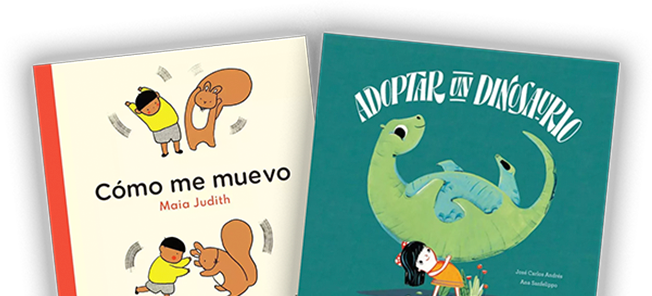
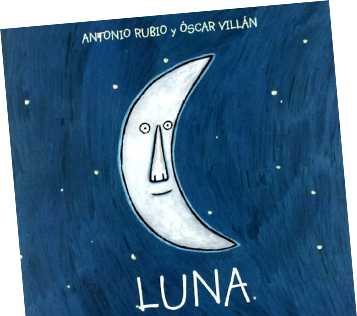
This is, in the end, the whole reason we do what we do. A warm home runs on good material — songs worth singing, stories worth a tenth reading, books a child genuinely wants in their hands. We spend our days finding exactly those: the most delightful Spanish-language books from independent presses across Latin America and Spain, the kind that make the language easy to love.
If you'd like a little help keeping that warmth stocked, see how it works →
But that part can come later. Tonight, the move is simpler than you thought. Don't push. Just open the book, and let the language be a pleasure.