Most parents trying to raise a bilingual child think about Spanish exposure as a volume problem. More minutes, more books, more time. And in a sense, they're right — bilingual learning does happen on a long timeline, and consistency matters more than intensity.
But not all minutes are created equal. There's a window every evening when Spanish lands deeper than at any other point in the day.
It's the five to ten minutes between bath and sleep.
Why bedtime is a different kind of Spanish
A child's brain at the end of the day is in a specific state — calm, relaxed, emotionally safe, and operating in a low-stakes context where comprehension can stretch beyond their normal limits. Researchers studying second-language acquisition have a name for this kind of optimal input: comprehensible input — language that's slightly above the child's current level, supported by enough visual and emotional context that they can decode the meaning even when they don't know every word.
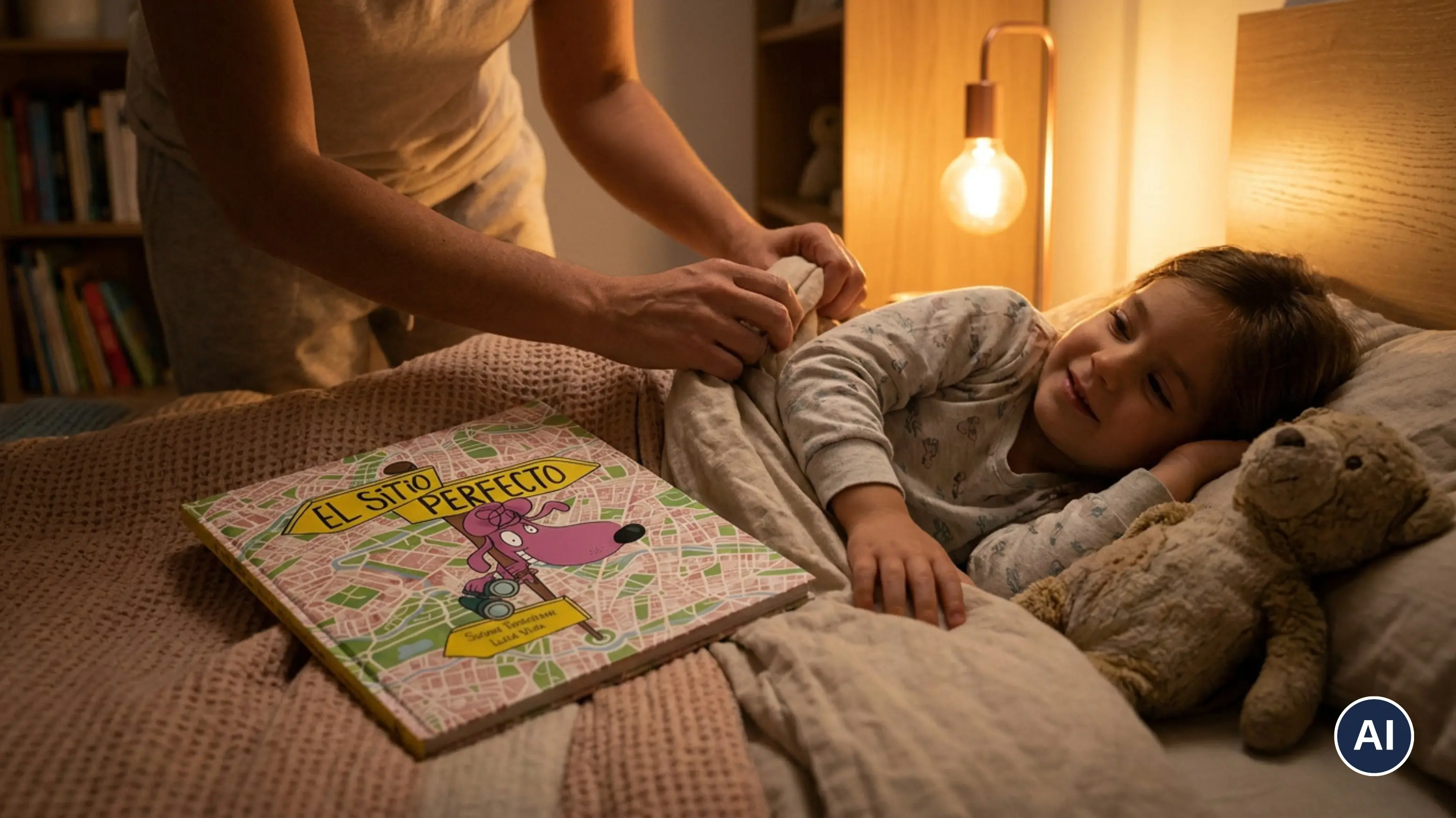
Bedtime delivers this naturally. The book is familiar. The voice is trusted. The room is quiet. The child isn't multitasking. There's no pressure to perform, no sibling interrupting, no screen pulling attention. Whatever Spanish enters during this window enters cleanly — encoded with warmth, repetition, and the emotional weight of a parent's presence.
That's the part worth understanding. Bedtime Spanish isn't important because it's the most Spanish your child gets. It's important because it's the deepest.
Get libros your child will ask for again & again.
Reserve your boxCancel anytime. We'll swap any book you already own.
What actually works in those five minutes
Most parents already treasure that window. But there are a few specific things you can do during it that make the Spanish work harder — and a few common instincts worth setting aside.
Lean into the favorites. Parents sometimes save bedtime for new books, thinking variety is what teaches. But repetition is when language acquisition actually happens — the third or fifth or tenth time a child hears a Spanish phrase in the same emotional context is when the brain locks it in. The most valuable book at bedtime is usually the one that's already been read several times.
Read at a normal speed. The instinct to slow down "to help them understand" backfires. Spanish has its own rhythm and prosody — the cadence, the stress patterns, the way words flow into each other. That rhythm is part of what your child's brain is cataloguing. Reading too slowly disrupts it and signals that Spanish is the harder, more effortful language. Read it the way it sounds.
Don't translate as you go. Trust the visual context to carry comprehension. If the picture shows a dog chasing a ball, your child doesn't need you to translate perro and pelota. The image and the story do that work. Stopping to translate breaks the flow and tells the child that Spanish needs English to be understood. The opposite is what you want.
Let them finish phrases they know. Pause before familiar words and let your child fill them in. El perro corrió hasta el… — and wait. This is where production starts to emerge. Not from being prompted or quizzed, but from being invited. A child who fills in árbol on their own is doing the kind of low-pressure speaking that leads to fluency, not the kind that creates resistance.
Keep the same routine. Same time, same space, same small rotation of books. Predictability compounds. The five minutes work harder when they're consistent — when your child knows that Spanish is part of bedtime the way teeth-brushing is.
How the library does the work
The bedtime rotation is small by design — three or four favorites your child reaches for again and again. But it's drawn from a much bigger pool. The books that don't make it into bedtime still serve their purpose: car rides, grandma's house, the quiet mid-afternoon stretch when your child wants to flip through pages alone.
That's how a Spanish library actually works. Not a fixed shelf — a living one. The collection evolves over time, and the best of any given chapter find their way into the most important real estate of all: the five minutes before sleep.
Looking for libros that earn their place in the bedtime rotation? Sol Book Box delivers handpicked Spanish and bilingual stories each month — the kind your child will ask for again & again.