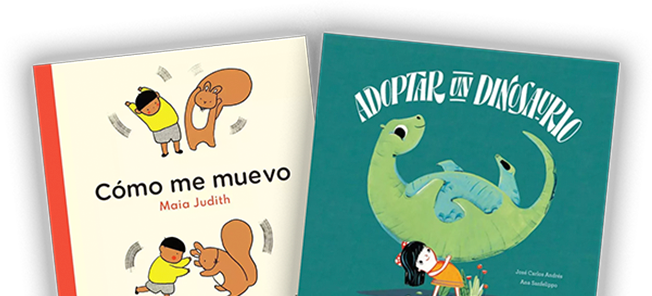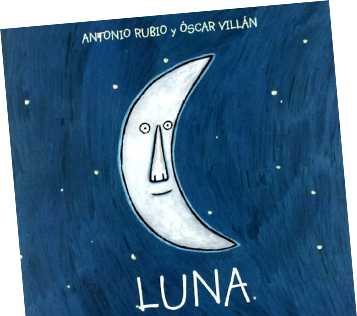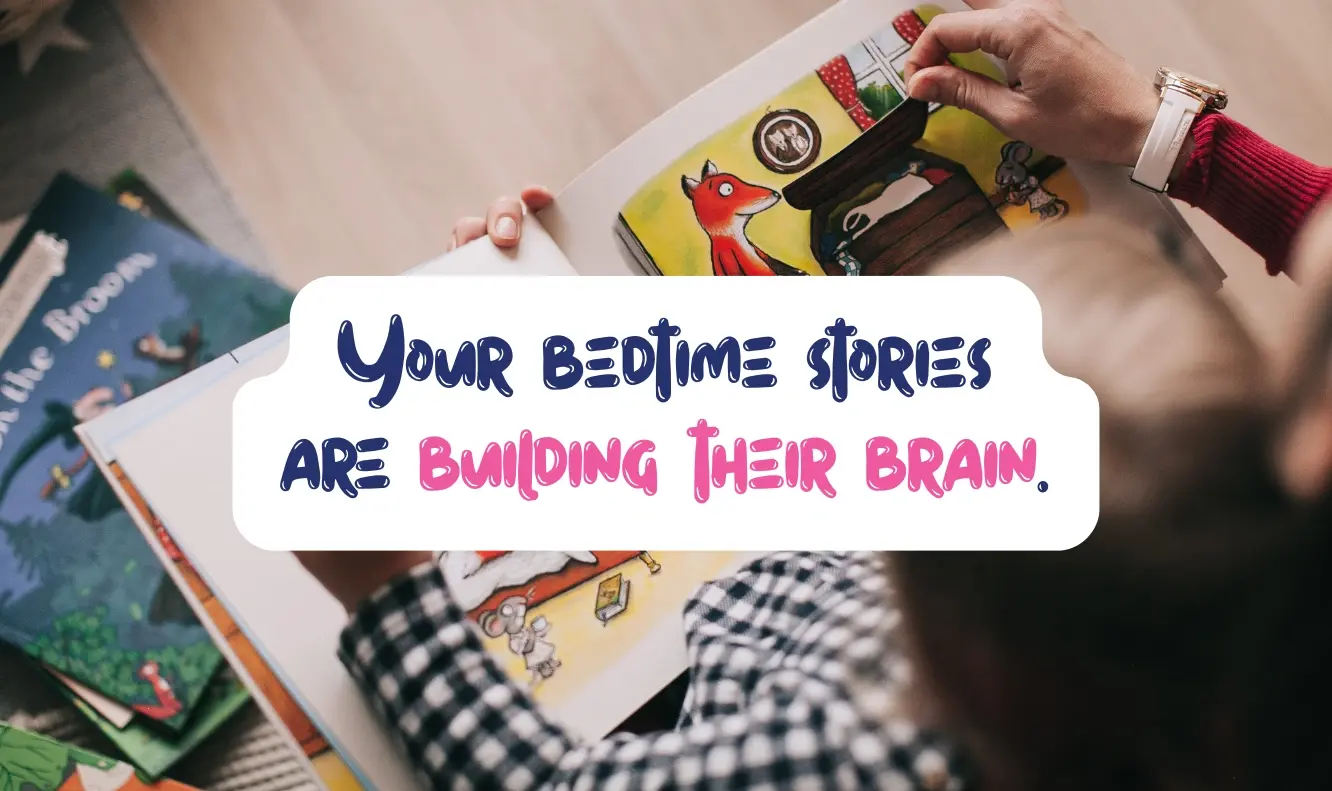
Get bedtime stories en español that your child will love.
Cancel anytime. We'll swap any book you already own.
You're curled up with your child, reading their favorite book for the hundredth time.
They interrupt to point at the pictures. They ask why the character did that. They repeat words back to you, getting some right and some adorably wrong.
It feels wonderful, but perhaps, ordinary. A simple bedtime ritual.
But here's what you might not realize: In those 10 minutes, you're doing something extraordinary.
Reading aloud isn't just about getting calming down before bed. It's building your child's brain, vocabulary, empathy, and love of language—all at once.
And when you read in Spanish (or any second language)? The benefits multiply.
Let's talk about what's really happening during storytime—and how to make the most of it.
What Happens When You Read Out Loud
📚 Your Child Is Absorbing Words (Way More Than You Think)
Every book introduces your child to words they might never hear in everyday conversation.
Think about it: When was the last time you said "magnificent" or "enormous" or "glistened" while making breakfast? But in books? Those rich, descriptive words show up constantly.
Here's what research shows: Children who are read to regularly enter kindergarten knowing 300+ more words than kids who aren't. By age 5, that gap can be as wide as 1.4 million words of language exposure.
For bilingual families, every Spanish book adds vocabulary your child might not encounter anywhere else—especially if English dominates at school or in the community.
What to do:
- Don't skip or simplify "hard" words—context and pictures help kids absorb meaning naturally
- Read books at slightly higher levels than your child speaks (that's where growth happens)
- Reread favorites often—repetition is how new words become familiar words
💬 Your Child Is Learning How Language Works
Picture books aren't just vocabulary builders—they're language teachers.
Through stories, kids absorb:
- Sentence structure and grammar (without needing a lesson)
- How conversations flow (dialogue in books models back-and-forth exchanges)
- Storytelling patterns (beginning, middle, end—plus cause and effect)
For bilingual readers, this is huge. When you read Spanish books, your child internalizes how Spanish sounds and works—the rhythm, the verb patterns, the way ideas connect.
Even if they're not speaking much Spanish yet, their brain is filing away these patterns. Later, when they're ready to speak, those stored patterns become the foundation.
What to do:
- Read with expression—use different voices, change your pace, emphasize emotion
- Point out story structure occasionally: "Uh oh, I think something is about to happen!"
- Let your child "read" back to you (even if they're just narrating pictures—that's practicing storytelling!)
❤️ You're Building an Emotional Connection to Reading (and to Spanish)
Here's something that doesn't show up on a vocabulary test: How reading makes your child feel.
When storytime feels warm, cozy, and connected, kids learn that books = love and safety. That emotional foundation is what turns kids into lifelong readers.
For heritage families, there's an added layer: Reading Spanish stories—especially ones you loved as a child, or that reflect your family's culture—creates a deep emotional link to the language.
Your child feels your warmth when you read in Spanish. They hear the pride in your voice. They sense that these stories matter to you—so they start to matter to them too.
What to do:
- Choose books you genuinely enjoy (your enthusiasm is contagious)
- Share why a story is meaningful to you: "My abuela used to read this to me"
- Make storytime a ritual—same time, same cozy spot, no distractions (phones away!)
🧠 You're Teaching Focus, Patience & Self-Control
Following a story requires your child to:
- Sit still (for a few minutes at least)
- Pay attention to what's happening
- Remember what happened on the previous page
- Wait to find out what happens next (instead of flipping ahead)
These are all executive function skills—the same skills that help kids succeed in school, manage emotions, and navigate social situations.
And here's where bilingualism gives kids a bonus: Research shows bilingual children often develop stronger executive function because managing two languages requires constant mental flexibility.
Every Spanish story you read? You're giving your child's "control center" a workout.
What to do:
- Start short (even 5 minutes counts!) and gradually build up stamina
- Let your child turn the pages—it keeps them engaged and gives them a sense of control
- If they wiggle or interrupt, that's normal—keep going, they're still listening
🌍 You're Raising a More Empathetic, Culturally Aware Child
Books are windows into other people's lives.
Through stories, kids meet characters who are different from them—and characters who are beautifully similar. They learn that people feel joy, sadness, fear, and excitement in all kinds of situations.
This builds empathy—the ability to understand and care about others' feelings.
For bilingual families, books also build cultural awareness. When you read authentic Spanish stories (not just English books translated into Spanish), your child learns about:
- Traditions and celebrations from Latin America and Spain
- Family structures and values from different cultures
- Folktales, legends, and history that connect to their heritage
Even learner families benefit—exposing kids to diverse cultures early makes them more open-minded, curious, and compassionate.
What to do:
- Look for authentic Spanish books from diverse authors and illustrators
- Ask questions during reading: "How do you think she's feeling?" "What would you do?"
- Connect stories to real life: "Remember when we visited Abuela and she made tamales like in this book?"
⏰ Why Even 10 Minutes a Day Makes a Massive Difference
You don't need an hour. You don't need flashcards or formal lessons.
You need 10 minutes and one book.
Here's why that matters:
10 minutes a day = 60+ hours a year of language exposure
1 book a day = 365 books a year
1 picture book = 20–50 new vocabulary words
Do the math: That's 7,000+ Spanish words your child hears over one year—naturally, joyfully, through stories.
And those 10 minutes? They compound. Year after year, story after story, your child's bilingual brain is growing.
The key isn't intensity—it's consistency.
What to do:
- Pick a time that works for your family and stick to it (bedtime is popular, but morning or afternoon works too!)
- Keep a stack of books in an easy-to-reach spot so you're never scrambling
- If you miss a day, don't stress—just pick up the next day
--
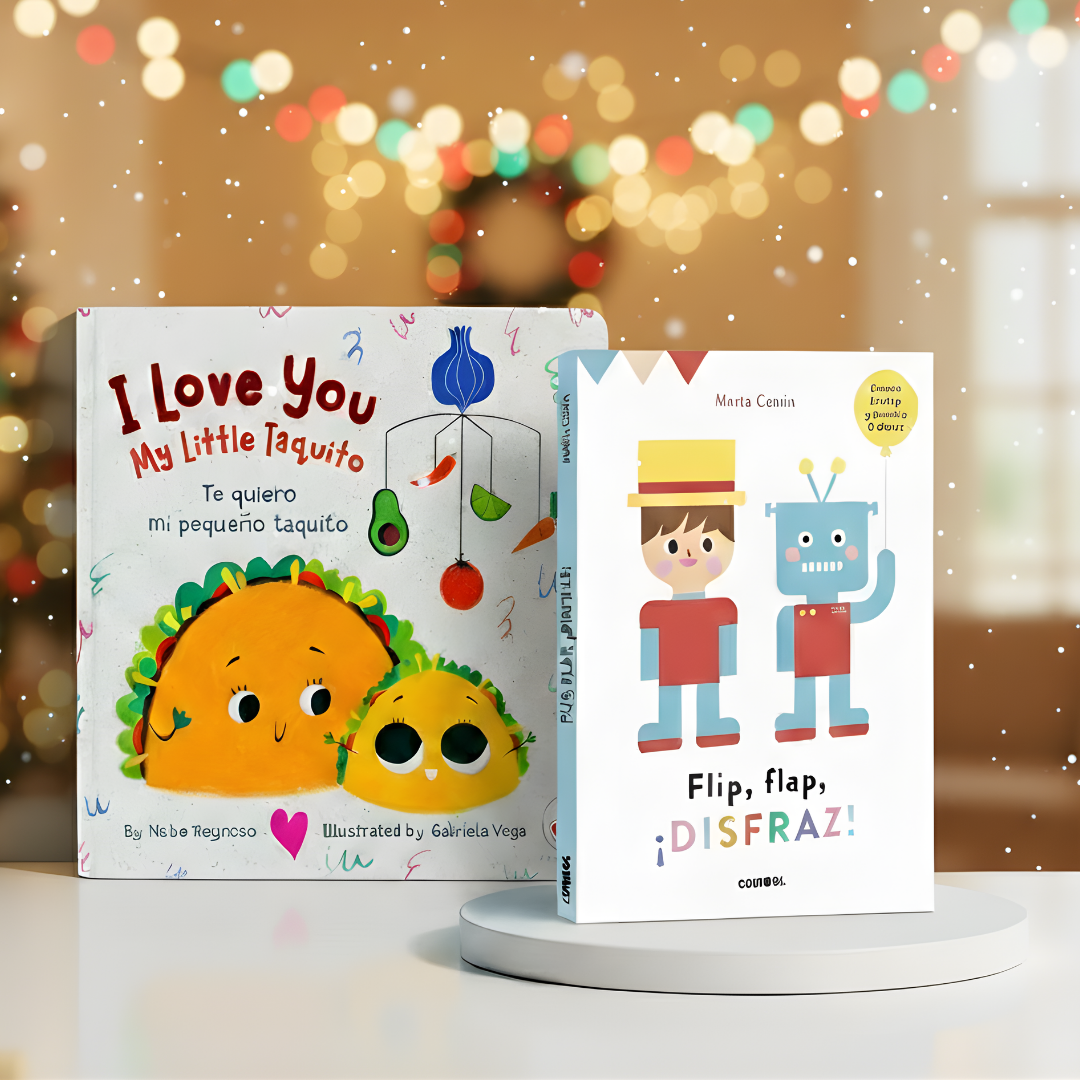
Our Board Book Box is made for this exact moment — Small and sturdy books built for curious little hands. Sourced globally. Stories you won't find elsewhere. Curated for bebés, toddlers, and the adults who read to them.