Most parents shopping for Spanish children's books start with the obvious question: Is it in Spanish?
That's a fine starting point. But it's a little like asking "Is it food?" when you're trying to feed your family well. Technically yes — but there's a universe of difference between what you'll find.
The best Spanish children's books don't just use Spanish words. They carry culture. They hold stories, traditions, and perspectives that were born in Spanish — not translated into it as an afterthought. And while that distinction might sound subtle, your kid will feel it, even if they can't explain why.
Here's what most parents don't know to look for — and why it matters more than you think.
The difference between “in Spanish” and “from Spanish”
*Sol Book Box delivers handpicked, culturally authentic Spanish books to your door every month. [See our available plans →]
Walk into any major U.S. bookstore and look at the Spanish section. You'll find a small shelf — maybe two — tucked in the back. Most of what's there falls into one of two categories: English bestsellers translated into Spanish, or simple bilingual word books (colors, numbers, animals).
There's nothing wrong with either of those. But they represent a tiny sliver of what exists. Across Latin America and Spain, there are thousands of extraordinary children's books being written and illustrated every year by authors and artists who live and breathe these cultures. Books where the Spanish isn't a layer applied on top — it's the foundation the whole story is built on.
The difference shows up in ways that are hard to quantify but easy to feel. A great translation can absolutely capture the heart of a story. But there's something special about a book that was born inside a culture — where the language, the humor, the details, and the world it creates all come from the same place. It's the difference between learning about a culture and being invited into one.
Three books that show what authenticity actually looks like
Let me show you what I mean with three books we've featured at Sol Book Box. Each one is authentic in a different way — and none of them are the kind of thing you'd stumble across at Barnes & Noble.
A story that couldn't exist in translation
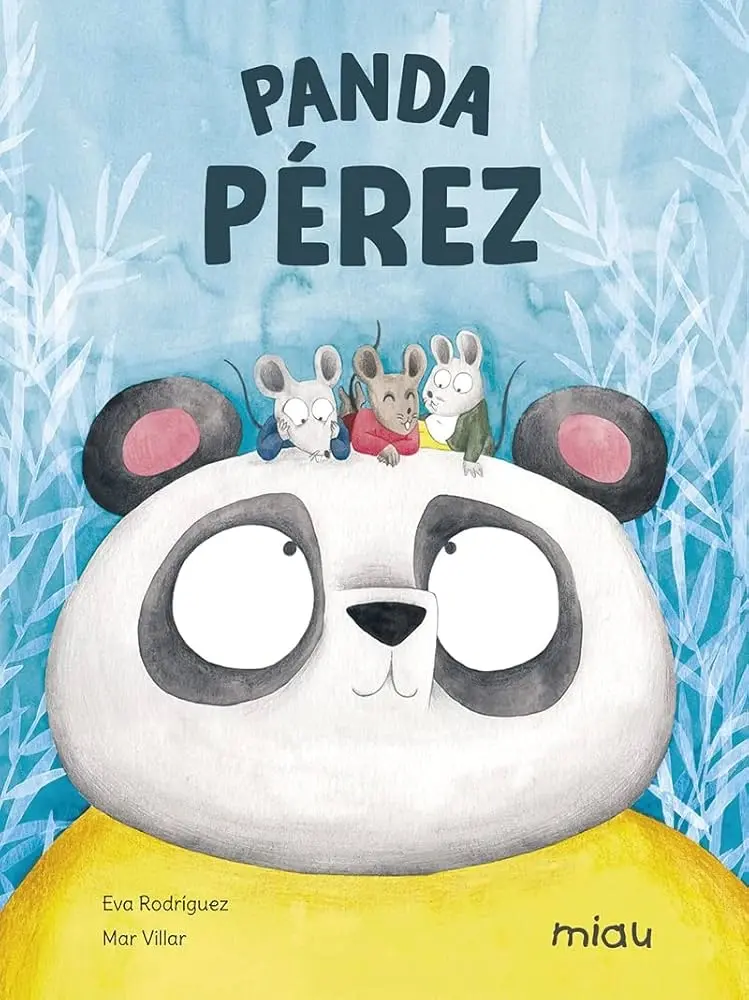
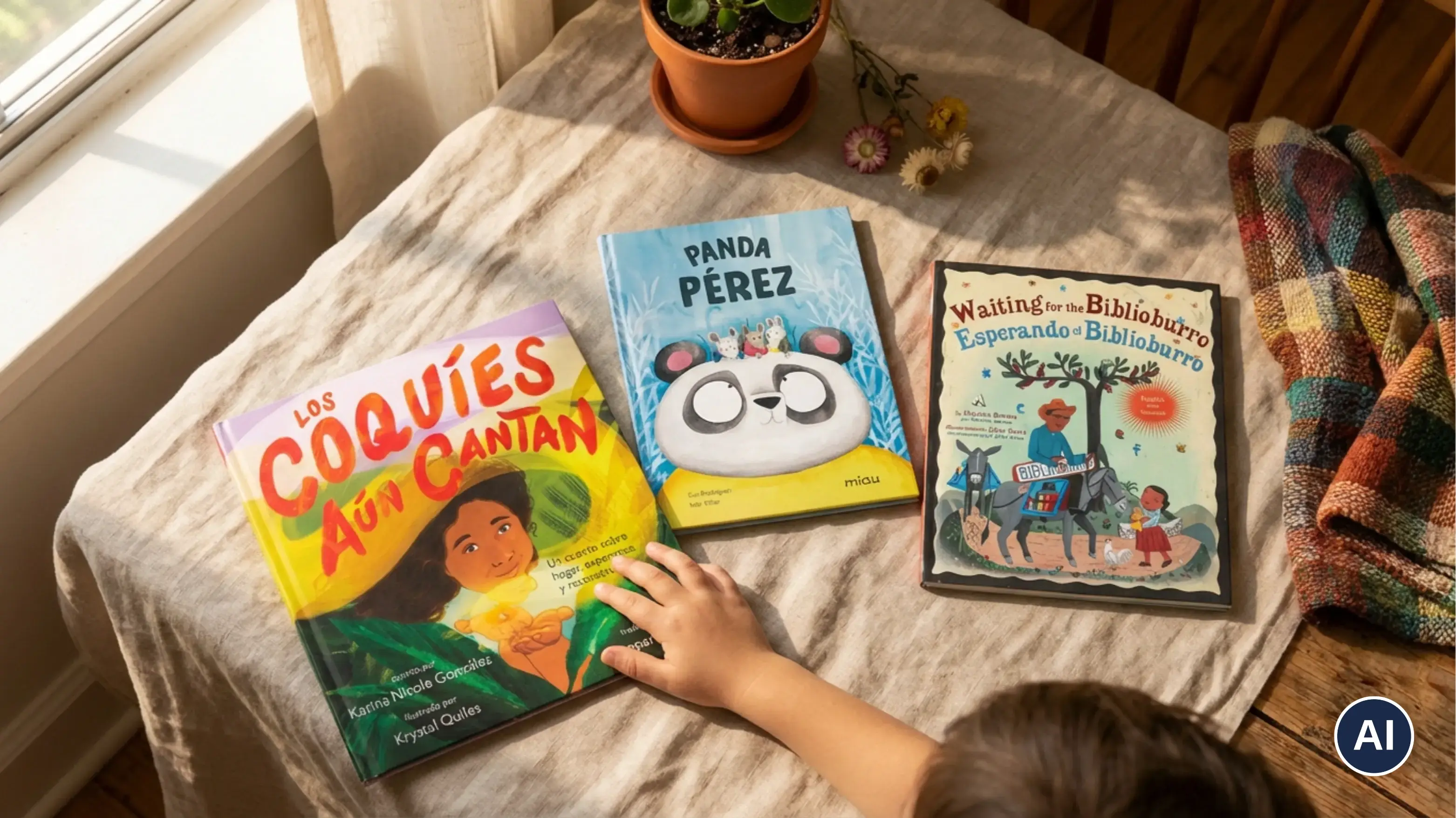
Panda Pérez is a picture book from Madrid about a panda who dreams of becoming the first bear to graduate from the School of Ratón Pérez — and collect children's teeth.
If you grew up in the U.S., you probably have no idea who Ratón Pérez is. He's the Spanish Tooth Fairy — a tiny mouse who sneaks into children's rooms to collect their baby teeth and leave a coin. He's been part of Spanish-speaking culture since the late 1800s, when a story was written for the young King Alfonso XIII. Today, kids across Spain, Mexico, Argentina, Colombia, and beyond grow up with Ratón Pérez the way American kids grow up with the Tooth Fairy.
This book couldn't exist as a translation. The entire premise — a panda enrolling in Ratón Pérez's school — is built on a cultural tradition that most English-language publishers wouldn't even know how to explain on a jacket cover. Written by Eva Rodríguez Juanes and illustrated by Mar Villar, both based in Spain, every page is rooted in a world your child won't encounter anywhere else.
That's what authenticity looks like. Not just the right words, but the right world.
An authentic voice, even in English first
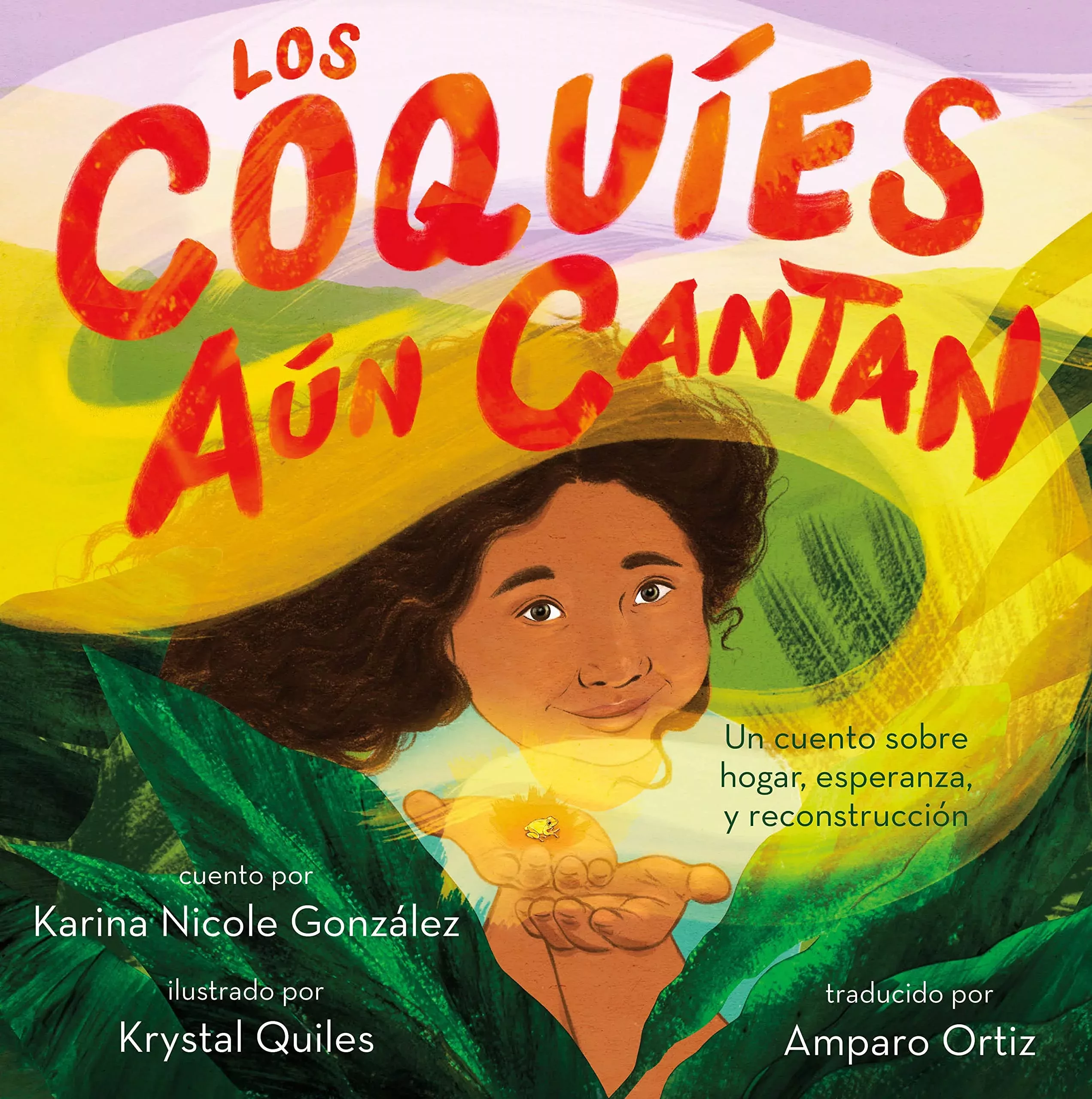
Los Coquíes Aún Cantan tells the story of a young girl named Elena in Puerto Rico. The coquíes — tiny tree frogs whose song is the soundtrack of Puerto Rican life — sing from the mango tree outside her home. Then Hurricane María arrives and destroys everything. Slowly, Elena and her community rebuild. And eventually, the coquíes sing again.
Here's what's interesting: this book was originally written in English, by Karina Nicole González, a Puerto Rican author. Then it was translated into Spanish by Amparo Ortiz, and illustrated by Krystal Quiles — also Puerto Rican. Yuyi Morales, one of the most celebrated Latina children's book creators in the world (a Caldecott honoree and the creator of Dreamers), called it "beyond beautiful."
This is an important example because authenticity isn't only about language. It's about voice. González didn't need to write in Spanish first for this story to carry the weight of Puerto Rican culture, identity, and resilience. The coquí isn't just a frog in this book — it's a symbol that any Puerto Rican child (or grandchild, or great-grandchild) will recognize in their bones.
A book like this teaches your child something no vocabulary list ever could.
A true story that crosses borders
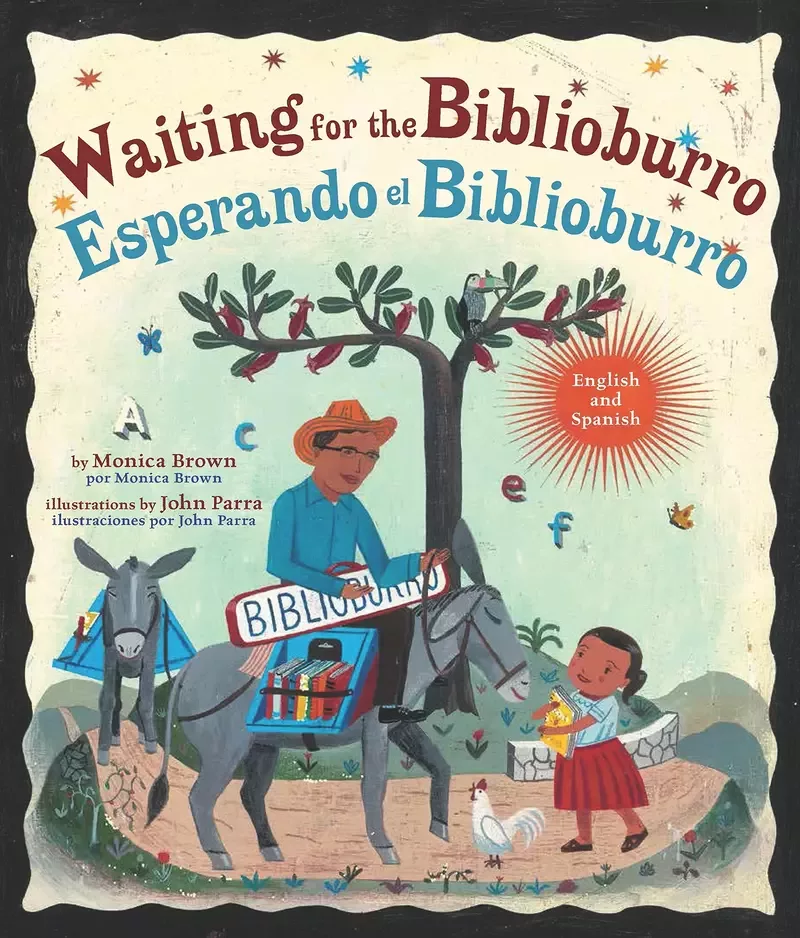
Waiting for the Biblioburro / Esperando el Biblioburro tells the real story of Luis Soriano Bohórquez, a teacher and librarian in rural Colombia who packs his two burros, Alfa and Beto, with books and rides them over mountains and through valleys to bring stories to children in remote villages.
Written by Monica Brown and illustrated by John Parra (both acclaimed voices in Latino children's literature), this bilingual edition brings a remarkable true story to life. A Colombian teacher-librarian, inspired by his belief that every child deserves access to books, created a mobile library on the back of two donkeys. The children in the villages wait for him. They line up. They read.
It's a story about the power of literacy, told through a specifically Colombian lens — the rural landscape, the community bonds, the resourcefulness. Your child isn't just learning Spanish when they read this book. They're learning about a part of the world they'd never otherwise see, through the eyes of someone who lived it.
Why this matters for your kid (more than you might think)
When children read books that are culturally authentic, three things happen:
They absorb language the way it's actually used.
Books written from within a culture use the idioms, rhythms, and expressions that native speakers actually use. That natural flow gives your child a richer sense of how the language really sounds and feels — the difference between learning Spanish and absorbing it.
They see the world through a wider lens.
Ratón Pérez. Coquíes. A librarian on a donkey. These aren't just cute details — they're windows into how other cultures think, celebrate, grieve, and dream. Research consistently shows that children who are exposed to diverse, authentic stories develop stronger empathy and cultural understanding.
They feel represented — or they feel welcomed.
For heritage families, these books are mirrors. Your child sees their own culture reflected back in a way that validates who they are. For families learning Spanish, these books are doors. They invite your child into a culture with respect and depth, not just surface-level vocabulary.
The hard part: finding these books
Here's the uncomfortable truth: Even if you know what to look for, finding culturally authentic Spanish children's books in the U.S. is genuinely difficult.
Most major U.S. publishers and retailers prioritize translations of existing English hits. Independent publishers in Latin America and Spain produce incredible work, but their distribution in the U.S. is limited or nonexistent. The books that do make it to American shelves tend to be the ones that fit neatly into existing categories — which often means the most culturally specific (and most valuable) titles get left behind.
This is exactly the problem we built Sol Book Box to solve.
Every month, we dig through catalogs from publishers across the Spanish-speaking world — from Spain, Mexico, Colombia, Argentina, Puerto Rico, and beyond. We look for the books that carry real cultural weight. Books with Caldecott-honored illustrators. Books about coquíes and biblioburros and Ratón Pérez. Books your child would never encounter on their own, but will ask you to read again and again.
We send them to your door, handpicked for your child's age and reading level, gift-wrapped and ready to go.
Because the best Spanish books for your kids aren't on your shelf yet. But they should be—and now they can.