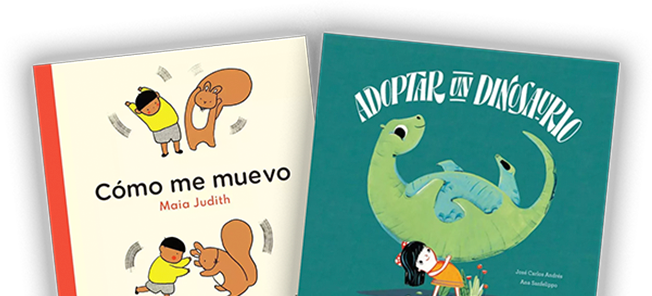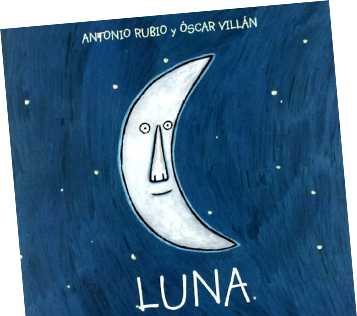
Here's what we mean.
A Language That Was Set Aside
Matt de la Peña grew up in San Diego, right near the Mexican border. His dad was Mexican. His mom was white. And like a lot of families at the time, his father made a deliberate choice: English only at home. He believed speaking English well would give his kids a better shot at success. Spanish was set aside.
It worked, in a certain sense. De la Peña went to college on a basketball scholarship, earned an MFA in creative writing, and became a published author. But he was also, by his own account, a reluctant reader for most of his childhood. He was held back in second grade. He finished one book in all of high school.
Then something shifted. De la Peña started writing stories rooted in the communities he grew up in — working-class, diverse, bicultural. Stories about kids who didn't see themselves in the books on their classroom shelves. And in 2016, he became the first Mexican-American author to win the Newbery Medal, the highest honor in American children's literature.
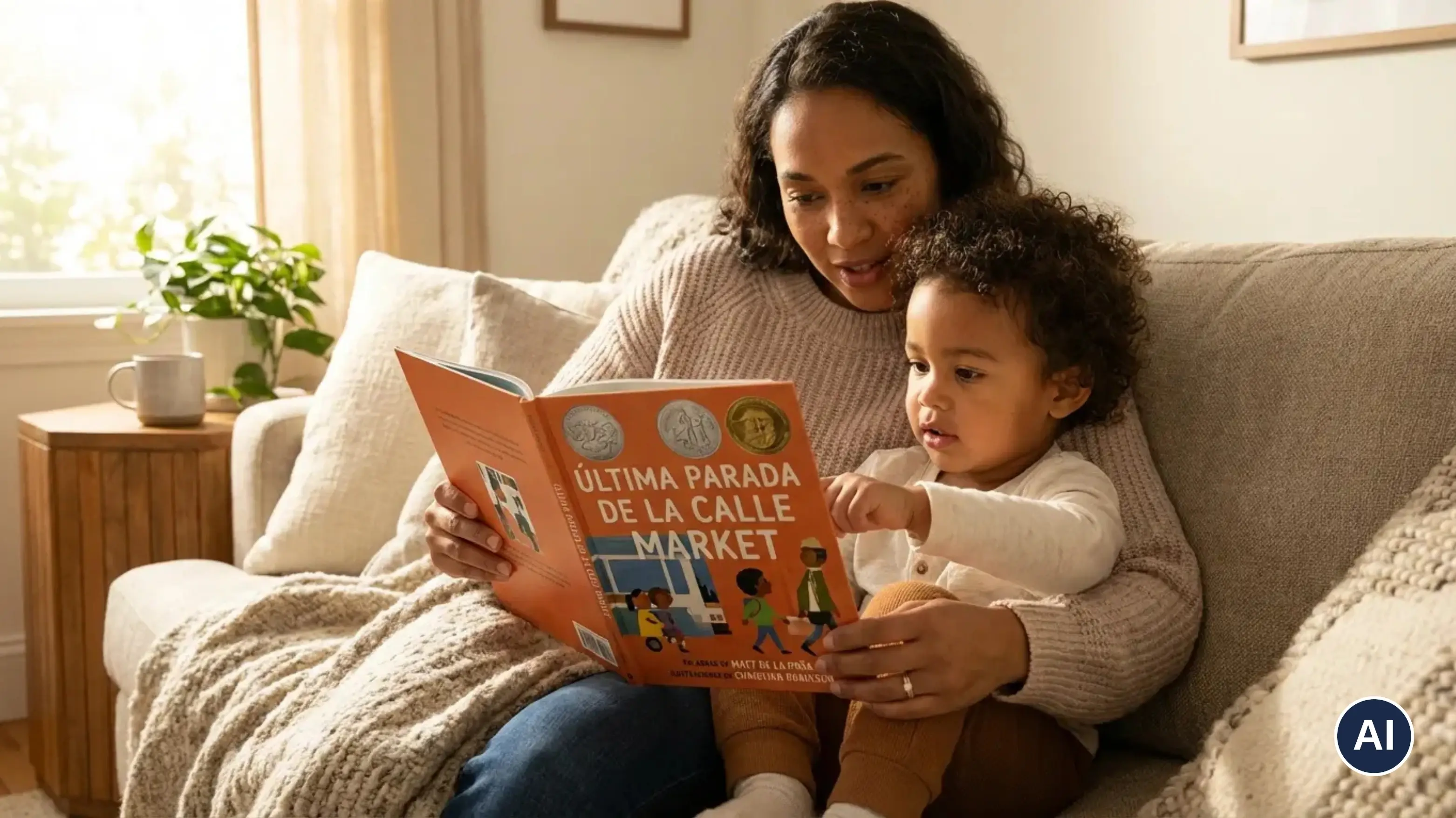
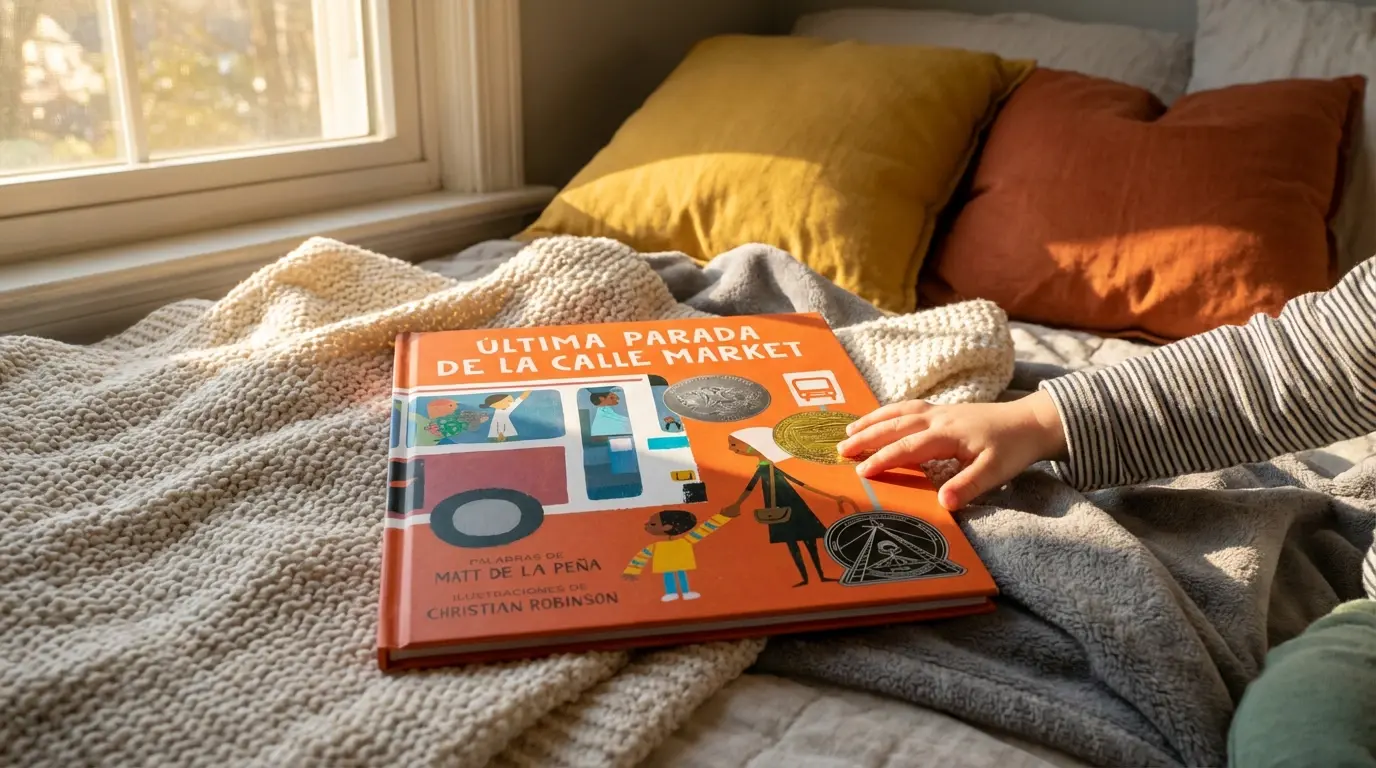
The book? Last Stop on Market Street.
A Story That Crosses Lines
Here's what makes this book surprising — and what makes it perfect for a conversation about reading in Spanish.
Last Stop on Market Street is not a "Latino book." The main characters — a young boy named CJ and his grandmother, Nana — are African American. Every Sunday after church, the two ride the city bus across town together. CJ has questions. Why don't they have a car? Why don't they have iPods like other kids? His Nana doesn't lecture him or dismiss his frustrations. She just gently opens his eyes to the beauty and richness in the world around them — in the people on the bus, in the music of a street performer, in the neighborhood they call home.
It's a story about how a grandmother teaches a child to see. And it was written by a Mexican-American man whose family set Spanish aside — and who is now bringing it back.
Why This Matters for Your Bilingual Bookshelf
When we choose which books to read with our kids in Spanish, we tend to default to one of two approaches: either we grab whatever's available (usually basic vocabulary books), or we specifically seek out books with Latino characters and cultural themes. Both are fine. But both miss something important.
The best books to read in Spanish aren't always the ones that look "Spanish" on the surface. Sometimes it's a story like this one — a story about an African-American grandmother and her grandson on a city bus — that hits differently when you read it en español. Not because the characters are Latino, but because the themes are universal to families who value intergenerational wisdom, who teach their children through showing rather than telling, and who believe that how you see the world matters more than what you own.
When you read this book in Spanish with your child, you're not just practicing a language. You're making a choice about the kind of family you want to be. You're saying: these values — gratitude, empathy, seeing beauty in the ordinary — are part of our story too, in our language.
That's what makes a bilingual bookshelf powerful. Not just that the words are in Spanish, but that the act of reading them in Spanish becomes meaningful.
The Language Came Back
There's one more piece of this story worth knowing. De la Peña — the kid who grew up in a house where Spanish was deliberately set aside — now makes sure that all of his picture books are published in both English and Spanish. His publisher, Penguin, makes it happen.
And his father? The one who thought English-only was the path forward? He helped title one of the Spanish editions.
The language came back. Not because anyone forced it, but because the stories needed it.
That's something worth thinking about the next time you're choosing a bedtime book. Not just can we read this in Spanish — but should we? Does this story come alive in a different way when it's shared in the language your family is building together?
Sometimes the answer is yes. And when it is, that's when reading in Spanish stops being practice and starts being something deeper.
¡Feliz lectura!
Última parada de la calle Market is featured in our February 2026 boxes.