A child who understands Spanish but answers in English is showing the normal gap between comprehension and speech. That gap exists in every child, and in bilingual children it runs wider, and it is widest of all in whichever language they hear less of. The quiet stretch that comes with it has a name, the silent period, and for most children it is shorter than parents expect. What it responds to is steady input. What it responds badly to is pressure.
Quick answers
- Understanding a language before speaking it is normal and well documented. In bilingual children the distance between what they understand and what they produce is wider than in monolingual children.
- The quiet stretch is often called the silent period. It is real, but it is not universal and not every child goes through one.
- It tends to be shorter than parents assume. Individual variation is enormous, and a stretch measured in weeks is far more common than one measured in years.
- Silence is not idleness. Recordings of children in this phase captured extensive private speech — repeating, rehearsing, and recalling words quietly to themselves.
- Most children in this phase are not literally silent in Spanish. They chime in on the last word of a song, shout the refrain, finish the line they know by heart. That is speech.
- Keep speaking Spanish even when your child answers in English. Input is the part you control, and production follows it.
- Requiring a child to speak Spanish is associated with losing the language, not keeping it. The families that hold on to it tend to be the ones who made it enjoyable.
On this page
- What's happening: the silent period
- How long does the silent period last?
- Five things that help
- Four things that backfire
- When will they start speaking?
- The thing that will keep you going
- Silent period FAQs
Your child understands everything you say in Spanish.
When you ask them to bring their shoes — "Tráeme tus zapatos" — they do it. When you read them a Spanish story, they follow along, laugh at the right moments, point at the pictures.
They clearly comprehend.
But when you try to have a conversation in Spanish? English.
When you ask them a question? English.
When you encourage them to respond in español? They shut down, get frustrated, or flat-out refuse.
If this is happening in your home, you're probably feeling some combination of:
- Discouraged ("Is any of this working?")
- Guilty ("Should I have started earlier? Done more?")
- Worried ("Are they losing the language? Is it too late?")
- Exhausted ("Maybe we should just switch to English and make life easier")
Here's what we want you to know: this is common, it has a name, and it does not mean the Spanish isn't landing.
What's Happening: The "Silent Period"
What you're describing is often called the silent period, or receptive bilingualism. It is a stretch where a child understands a language well but produces very little of it out loud.
One caveat worth stating plainly, because most articles on this topic flatten it: the silent period is well documented, but it is not a law. A 2014 review of twelve studies of the silent stage found the evidence for it as a fixed, universal phase thinner than the popular version suggests. Plenty of children never have one. So the useful framing is not your child will go quiet, but if your child has gone quiet, here is what tends to be going on.
They're Building a Foundation
Comprehension comes before production in every language and every child. Even monolingual babies understand dozens of words before they say their first mamá. In bilingual children the same sequence holds, with a wider gap, because there are two systems being sorted at once. The gap is widest in whichever language they hear less of.
During that stretch your child is absorbing vocabulary, internalizing how Spanish sentences are built, and tuning their ear to sounds English doesn't use.
And they are doing more than absorbing. In one well-known study, researchers clipped radio microphones to children who appeared silent in their second language and found they were rehearsing constantly under their breath: repeating words, recalling phrases, practicing privately where no one could evaluate them. The quiet is not an empty stretch. It's a rehearsal that happens to be inaudible.
They're Defaulting to the Language That Works
If your child spends their day in English at school, at daycare, or with friends, their brain has drawn a reasonable conclusion: "English is the language everyone here answers."
So even though they understand Spanish, English comes out first, because it feels:
- Easier — less mental effort to retrieve
- Safer — less risk of getting it wrong
- More useful — more people respond to it
That's a strategy, not a verdict on Spanish. And strategies shift when the conditions around them shift.
They're Waiting Until It Feels Safe
Some children will try a new word the moment they hear it and cheerfully mangle it. Others want to be sure before they open their mouth.
There's a useful finding here. In a longitudinal study of thirty preschoolers, fifteen bilingual and fifteen monolingual, the factor that best predicted a child going quiet was anxiety, not bilingualism. Being bilingual had no effect on its own. Whatever makes a child hesitant to speak is usually about how safe speaking feels, not about the second language.
Which is why the things that help are almost all about lowering the stakes.
How Long Does the Silent Period Last?
Shorter than most parents fear, with enormous individual variation.
The honest answer is that nobody can give you a number for your child. What the research does suggest is that the popular image of a child who goes quiet in Spanish for years is the exception rather than the pattern. Surveys of children entering a new language environment have found average silent stretches measured in weeks, with some children barely pausing at all.
Length varies with:
- How much Spanish they actually hear — daily immersion versus occasional conversations
- How dominant English is in their day — school, friends, screens
- Temperament — the child who risks a wrong word speaks sooner than the child who won't
- Age — peer pressure arrives around school age and raises the cost of sounding different
One thing worth knowing rather than worrying about: some researchers have argued that a prolonged silence, months and months with nothing, not even a chimed-in word, may say more about how a child feels around the language than about how they're acquiring it. If that's where you are, the move is not to push harder. It's to make Spanish lighter: more songs, more stories, fewer requests to perform.
The part that matters most: the silent period is not permanent, but it is conditional. Children who understand Spanish today can become speakers tomorrow, provided the input keeps coming. If the Spanish books stop, the conversations stop, and the songs stop, a quiet phase can turn into real loss.
Five Things That Help
If pressure doesn't work and giving up isn't the plan, here's what's left, and it works better than it sounds like it should.
1. Keep Speaking Spanish, Even When They Answer in English
This is the single highest-leverage thing you can do, and it costs nothing.
Your job is to supply the input. Their job is to absorb it. Output arrives later, and only if the input never stopped.
What this looks like:
- You: "¿Qué quieres para el desayuno?"
- Child: "Cereal."
- You: "Okay, cereal. ¿Con leche o sin leche?"
- Child: "With milk."
- You: "Perfecto, con leche."
You're modeling Spanish without requiring it. Over months, the Spanish starts leaking into their side of the exchange, but only if they keep hearing it.
2. Build Low-Pressure Openings
Rather than asking for Spanish in conversation, set up moments where Spanish comes out sideways, without anyone being on the spot.
- Singing. Put on Spanish music and sing along together. Music slips past self-consciousness entirely.
- Games. "Veo, veo..." and anything where a one-word answer wins.
- Storytime choices. Hold up two books: "¿Quieres este libro o este?" Pointing counts; saying "este" counts more.
- Portable phrases. A handful of lines they can fire off without composing anything — "¡Qué rico!" when something tastes good, "ya voy" when you call them.
- A fixed nightly slot. A short, repeating ritual does more than a big effort once a week. Our five-step Spanish bedtime routine takes about ten minutes and is built for exactly this.
3. Find Spanish Somewhere Other Than You
Plenty of children who won't speak Spanish with a parent will try it with somebody else, especially another kid.
- Playdates with bilingual families — hearing other children speak Spanish makes it ordinary
- A Spanish-speaking sitter or tutor — someone fun, with no history and no expectations
- Bilingual story time at the library — group settings lower the spotlight
- Video calls with abuelos — wanting to be understood by someone you love is the strongest motivation there is
Spanish coming from several directions tells a child it's a real language people actually use, not a household rule.
4. Keep Reading Spanish Books Every Day
A child who won't speak Spanish will still take it in through stories, and books deliver a kind of Spanish that conversation doesn't. Picture books carry roughly three times the rare vocabulary of everyday child-directed speech, which means the daily read is doing work your dinner-table Spanish can't.
Reading aloud also:
- Shows how Spanish sentences are put together, in complete and correct form
- Attaches the language to a moment your child likes
- Keeps Spanish present in the day without anyone being asked to perform
The silent period is not the time to stop reading in Spanish. It's when the reading matters most.
Make it non-negotiable, the way brushing teeth is. One book. Every night. If reading aloud in Spanish feels shaky when it isn't your first language, our guide to reading aloud in Spanish covers how to do it without being fluent.
5. Count the Chime-Ins
"My child won't speak Spanish" is almost never literally true.
Children described as receptive usually do produce Spanish, just not the kind parents are counting. They shout the last word of the song. They supply the refrain. They finish the line of the book they've heard forty times. They use a ritual phrase in the right place. Researchers who look closely at receptive bilingual children keep finding this: the speech is there, in chunks and fragments, before it ever shows up as a spontaneous sentence.
So change what you're counting:
- One Spanish word inside an English sentence — that's production.
- Singing along to a Spanish song — that's production.
- Laughing at the right line in a Spanish book — that's comprehension, on the record.
Notice it out loud, lightly, without turning it into an event. "Me encanta cuando cantas esa canción" does the job. A round of applause turns the next one into a performance.
Four Things That Backfire
This is the part most articles skip, and it may matter more than the list above.
A case study of Hispanic families in Vancouver found a pattern that's uncomfortable to read and worth reading anyway: the homes that lost the heritage language were the ones that leaned on requirement, insisting the children speak Spanish and correcting them into it. The homes that kept it used the language in ways the children enjoyed: books, songs, play. Small study, and not proof on its own. But it points the same direction as everything else here.
1. Withholding Until They Ask in Spanish
Holding the cup, the snack, or the answer hostage until it's requested in Spanish turns the language into a toll booth. It usually produces the word once, and resentment after that.
2. Correcting Mid-Sentence
A child working up the nerve to produce Spanish and getting interrupted for gender agreement learns something specific: speaking Spanish invites correction. Let it go and recast instead. They say "la perro," you answer "sí, el perro es grande." The right form is in the room without anyone being marked wrong.
3. Quizzing
"¿Cómo se dice 'apple'?" in front of company is a test, and children read it as one. Putting a young child on the spot to produce a word on demand runs directly into the anxiety pathway described above. Ask about the book instead of about the language.
4. Letting Spanish Become the Language of Correction
Watch what Spanish is for in your house. If the Spanish a child hears most is no toques eso and ya basta, while affection and jokes and bedtime all happen in English, they will draw the obvious conclusion about what Spanish is. Whatever else changes, the language needs to be attached to the good parts of the day.
When Will They Start Speaking?
We can't give you a date. Here's what we can tell you.
Most children move from understanding to speaking when the conditions hold. Those conditions are:
- Consistent exposure — conversation, books, music
- Chances to use Spanish where nothing is riding on it
- Emotional safety — no shame, no pressure, no correction as a default response
- Motivation — someone they want to talk to, something they want to understand
- Time, and a parent who keeps going during the part where nothing appears to be happening
Some children switch on suddenly. One day the answer comes back in Spanish and nobody planned it. Others drift across, adding one more Spanish word per sentence, month over month, until Spanish is simply what they use for certain things.
There's no correct timeline. There is a pattern: children who hear Spanish consistently and feel safe using it end up using it.
The Thing That Will Keep You Going
On the hard days, this is the part to hold on to.
Your child is listening.
Every Spanish word you say. Every story you read. Every song. Every "buenos días" and "te quiero" and "dulces sueños."
They're filing all of it. Vocabulary, grammar, the shape of the sounds.
And one day they'll surprise you. They'll use a word you didn't know they had. They'll answer in español without deciding to. They'll ask what something means because they want to know.
And you'll realize it was working the whole time.
Silent Period FAQs
What is the silent period in language learning?
It's a stretch during which a child understands a language well but produces very little of it out loud. Comprehension keeps developing throughout. The term is widely used, though researchers disagree about how universal or how distinct a stage it really is.
Is it normal for my child to understand Spanish but not speak it?
Yes. Comprehension runs ahead of production in every child, and the gap is wider in bilingual children than monolingual ones, and widest in whichever language they hear less. A child who follows Spanish instructions and laughs at the right moments in a Spanish book is showing you the language is there.
How long does the silent period last?
There's no reliable number, and variation between children is enormous. Studies of children entering a new language environment have found average silent stretches measured in weeks rather than years. A very long silence is worth paying attention to, not as a failure, but as a signal to lower the pressure around the language.
Should I make my child speak Spanish?
Requiring it tends to backfire. Case studies of families who lost the heritage language found insistence and correction were common features of those homes, while the families who kept the language used it in ways children enjoyed. Keep supplying Spanish; don't demand it back.
Is my child losing their Spanish?
Not while the input continues. Understanding without speaking is a normal phase. Language loss is a different process, and it follows the input stopping: the books, the conversations, the music going quiet. As long as Spanish is still in the day, it's still being built.
What kind of books help during the silent period?
Books your child will sit through repeatedly, because repetition is what moves a word from recognized to retrievable. Predictable, rhythmic text also gives them something to chime in on, which is usually where speech restarts. For age-by-age guidance on formats and reading levels, see our guide to choosing Spanish books for kindergarten.
How is this different from selective mutism?
The silent period is specific to a second language and passes with continued exposure. Selective mutism is an anxiety-based condition in which a child consistently doesn't speak in particular settings despite speaking normally elsewhere, including in their first language. If your child has gone quiet across the board, or the silence is causing distress, that's a conversation for your pediatrician rather than a language question.
We're Here to Help You Stay Consistent
The silent period is where a lot of families quietly give up on bilingualism. It's also the stretch where consistency does the most work.
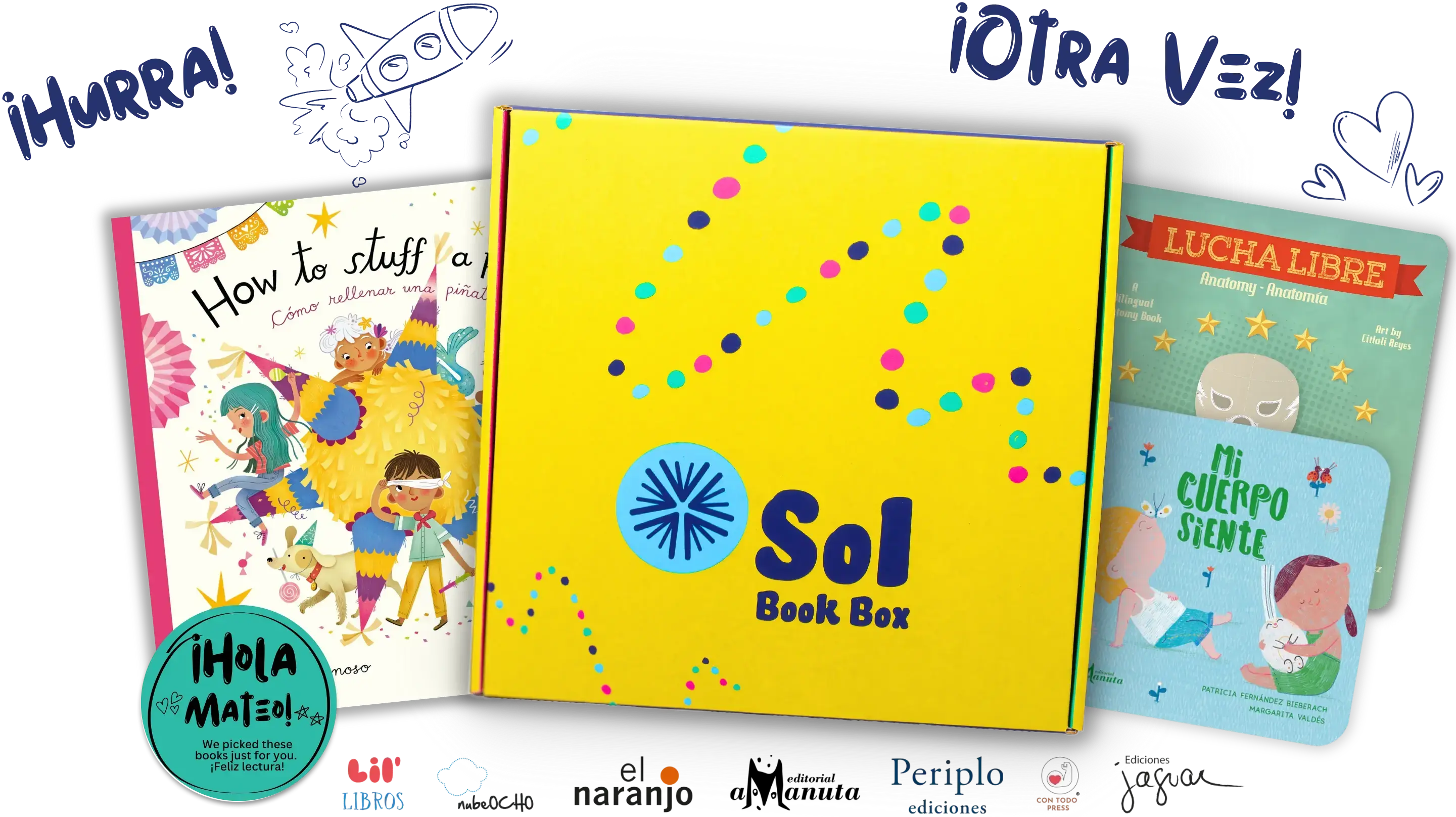
If you're running low on Spanish books, or out of stories your child will actually sit through again, that's the problem we exist to solve. Each month we send a curated box of Spanish and bilingual libros matched to your child's age, chosen for authentic language, repeat-read staying power, and the kind of story a child asks for twice.
Because the easiest way to stay consistent is to make it easy.
Get libros your child will ask for again & again.
Cancel anytime. We'll swap any book you already own.