Spanish reading builds quietly. A child can take in months of libros before much of it comes back out loud, and then one day they point at the duck in the bath and say pato.
The signs are all around you: the book they bring you themselves, a line that turns up at dinner, a finger moving under the words. Write them down once a month, and a year of growing turns into something you can hold in your hands.
Quick answers
- Page turning, pointing, retelling and reaching for a Spanish book are what progress looks like before a child can read.
- Reading often matters more than reading for long. Short sessions count.
- Mixing Spanish and English in one sentence is what a bilingual mind does. Log it as a strength.
- A child who feels tested stops reaching for the book. Ask because you want to hear about the story.
- Your child's pace is their own. No other child is the measure.
On this page
- Why tracking looks different for bilingual readers
- Five signs to watch for
- The one-page monthly log
- What progress looks like, age by age
- What teachers measure, and how to use it
- Test, teach, test
- Common tracking mistakes
- When to ask for extra help
- Make it a family project
- Questions parents ask
Why tracking looks different for bilingual readers
Most reading checklists are built for English. They assume one language, one set of letter sounds, one school timeline. Your child is doing something richer and more layered than that.
Two languages rarely grow at the same rate in the same month. Spanish might surge through the spring while English takes the lead over the summer, and then the two trade places. A quiet month in Spanish says nothing about your household, and a burst of English does not mean Spanish is slipping. What you are watching for is movement across a whole year. Month to month, the line is allowed to wobble.
Mixing is part of that picture. When your four-year-old says “quiero el big libro,” they are reaching for every word they have to get the meaning across. Fred Genesee, who has studied bilingual children at McGill for decades, puts it plainly: mixing does not mean that children are confused or impaired, and bilingual children do not break the grammatical rules of either language when they do it. All bilinguals mix, adults included. Log it as a win.
Five signs to watch for
You do not need a spreadsheet full of metrics. Five signs cover most of it.
1. Early reading behaviors
Long before a child reads a word, they do things with books that point toward reading. They turn the page at the right moment. They let the pictures carry the story. They run a finger under the print. The Department of Education’s family guidance for Spanish-speaking households names these as the early reading behaviors to recognize, and you can spot them from across the room.
2. Retelling
Ask your child to tell you the story in their own words, in Spanish or in both. Listen for the order of things (first, then, at the end), for the characters, for a describing word they did not have last time. Retelling shows you more clearly than anything else what your child understood at this age, and it changes the most from one month to the next.
3. Vocabulary that escapes the book
Does a word from the page show up at the park, in the bath, in pretend play? That is the moment a word becomes theirs. A child who says tormenta while pushing a toy truck through a puddle has done something a child who can point to tormenta on the page has not done yet.
4. Independence and choice
Who picks up the book? Who asks for it? Keep Spanish titles somewhere your child can reach without you, and count how many times a month they start a session themselves. This one moves slowly, and it means the most when it does.
5. Sentence length
Listen for answers that grow from one or two words into full sentences. Sentence stems give a child a frame to fill and give you something to listen for. Michele Coulombe and Erin Zuccaro, writing for NAEYC, recommend three during read-alouds: “I remember…,” “I learned…” and “I wonder…” They carry straight over: Me acuerdo de…, Aprendí que…, Me pregunto… Notice how much of the frame your child fills, and how often they get there without it.
The one-page monthly log
Once a month, write a few lines about what you noticed. You are writing it for yourself to read in a year, so it can be as rough as you like:
March
Same book four nights running, always the same page first. Said mariposa at the park with nobody prompting her. Told me most of Julieta y su caja de colores in the car, in order. Picked a Spanish book over an English one twice this week, which is new.
Three rules keep it honest and low stress.
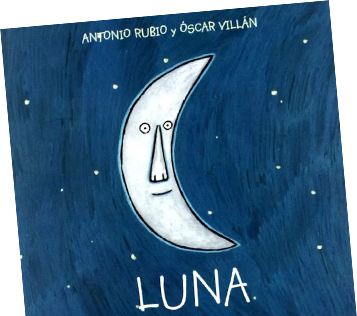
- Write what you saw and heard, in their words. “Pointed to luna on three pages” beats “is getting better,” and in a year the exact words are the part you will reread.
- Leave the Spanglish in. If she said quiero el big libro, write down quiero el big libro. Tidying it into one language loses the thing you were trying to catch.
- Read it back against your own notes. Your child six months ago is the comparison that shows you something. A cousin or a classmate the same age will not.
You will have more to write down if the reading is regular, and regular matters more here than long. If a full storytime feels like a mountain on a given night, start small. Our five to ten minute storytime plans are built for exactly that. It also helps to read in the same place at the same time, so that nobody has to decide anything. The sessions add up, and so does the log.
What progress looks like, age by age
Every child moves at their own pace, and none of this is diagnostic. Think of it as a list of things to notice and cheer on.
Ages 0 to 2: board book explorers
- Looks at the pictures and responds to your voice and the rhythm of Spanish
- Turns pages (several at once still counts)
- Points to a familiar picture when you name it: perro, pelota, mamá
- Brings you a book to start a session
Ages 3 to 4: picture book storytellers
- Joins in on repeated phrases and the ends of rhyming lines
- Answers open questions about the book, with or without a prompt
- Tells the story from the pictures, even when the words on the page say otherwise
- Notices print: their name, a favorite letter, a word on a sign
This is the age when pausing pays off. Stop before the predictable phrase and let them fill it in; ask ¿Qué crees que va a pasar? before you turn the page. That back-and-forth has a name and a research base, and our guide to dialogic reading walks through how it works.
Ages 5 to 6: emerging decoders
- Matches letters to sounds in Spanish, where spelling is mostly regular
- Reads familiar words and short sentences
- Retells with a beginning, a middle and an end
- Talks about how a character felt
Ages 7 to 8: growing independent readers
- Reads longer picture books and short chapter books with help
- Explains why something happened in a story
- Moves between Spanish and English and can tell you which language a word belongs to
- Asks for more books about a subject they have fallen for
Spanish books that keep up with your child.
Handpicked for their age and stage. Cancel anytime.
What teachers measure, and how to use it
Schools are getting better at assessing Spanish literacy in Spanish. One example in development is the A2i-ALE (Adquisición de Lectura en Español), a computer-adaptive assessment for pre-K through third grade being built at UC Irvine under a federal award that runs to 2027. It looks at three areas: word matching, letter knowledge and phonics, and reading for comprehension, at seven to twelve minutes per subtest.
It is not something you run at home, and you do not need to. What it hands you is three good questions for a parent-teacher conference:
- Is my child’s Spanish being assessed in Spanish, or only in English?
- How are they doing with letter sounds and word recognition in Spanish?
- How do they do on comprehension when they hear or read a story in Spanish?
Start with the first question. Elsa Cárdenas-Hagan, a bilingual speech-language pathologist who works with the Texas Institute for Measurement, Evaluation and Statistics, tells families to ask the school whether testing is being done in English or in the home language, because a child in the middle of learning English can look like a child with a difficulty.
Test, teach, test
Speech-language practitioners use an approach called dynamic assessment. They teach a child something small, then watch how quickly it takes hold. How fast it sticks is the measurement. You can borrow the shape of it at home.
- Notice. Your child cannot name the animals in a new book yet.
- Teach briefly. Point, name them, make the sounds, use each word in a short sentence.
- Notice again. Come back an hour later, or the next day. Does the word stick? Does it turn up on its own?
A child who picks something up quickly with a little help is usually a child who needed more exposure. An underlying problem is a separate question, and this exercise cannot answer it. Think of it as a way to watch learning happen. If you have real concerns about speech or language, that conversation belongs with your pediatrician or a bilingual speech-language pathologist.
Common tracking mistakes
Quizzing in the weaker language. A child who feels tested will avoid the book, and avoiding the book costs more than any question was going to tell you. Ask because you want to hear about the story.
Counting only formal reading. Storytelling in the bath counts. So does a conversation about abuela’s recipe, or a song in the car on the way to school. All of it feeds the same skills and belongs in the same log.
Treating code-switching as a problem. Moving between languages is what a bilingual mind does, and correcting it teaches a child that Spanish is a test they are failing.
Counting covers. The thirtieth reading of a favorite is where you hear your child join in, finish the line, and finally say the word themselves, and none of that shows up in a list of titles. Log the sessions alongside the books.
Waiting until your own Spanish feels ready. Most of these signs are visible without any Spanish at all: who reaches for the book, how long the retelling runs, whether a word escapes the page. Your imperfect Spanish is enough to notice all of it.
When to ask for extra help
Most uneven progress is the ordinary path of a bilingual child. Still, bring it up with your pediatrician, your child’s teacher, or a bilingual speech-language pathologist if you notice any of these:
- Your child is struggling in both languages at once
- Little babbling, few words, or limited back-and-forth at the ages your pediatrician asks about
- A loss of skills they already had
- Frustration around books or speaking that does not ease with time
Bring the log. A few months of dated notes in both languages give a professional far more to work with than “I think she is behind,” and they make it easier to ask that any evaluation take both of your child’s languages into account.
Make it a family project
Tracking works better when it is shared. Let grandparents add a line when they read over a video call. Let your child pick a sticker for every finished book. Put a chart at child height with a few pictures labelled in both languages, so the growing is something everyone in the house can see.
Give it a year and the log stops being data. It becomes a small family archive: the first time your daughter read luna out loud, the first story your son told his abuela in Spanish, the month the Spanish books started outnumbering the English ones on the floor by the couch. That is the part to keep, and it only exists if somebody writes it down.
Questions parents ask
How often should I check my child’s Spanish reading progress?
Once a month is enough for most families. Jot a few notes as you go, then sit down and compare them with the month before. Checking more often turns reading into a quiz, and a quiz is the fastest way to lose the fun.
Does mixing Spanish and English mean my child is confused?
No. A child who uses both languages in one sentence is drawing on everything they have to make their meaning land, which is what bilingual speakers of every age do. Note it in your log as a strength. If your child is struggling in both languages, that is the one to raise with your pediatrician or a bilingual speech-language pathologist.
Can I track progress if I do not speak Spanish well?
Yes. Most of the signs are visible without fluent Spanish: turning pages, pointing, choosing a Spanish book, joining in on a repeated phrase, retelling a story in their own words. Ask your child to tell you what a page says and note how much they give you. A recording on your phone, or a relative who speaks Spanish, can catch the details for you.
Is there a standardized test for Spanish reading at home?
Not one built for parents. Tools like the A2i-ALE are designed for teachers and instructional coaches in schools. At home, observation and a simple log fit better, and you can always ask your child’s teacher which Spanish assessments the school uses.
Start the log tonight with whatever is already on the shelf. If you’d like the shelf to keep growing, our boxes are built to give a child something new to reach for every month.