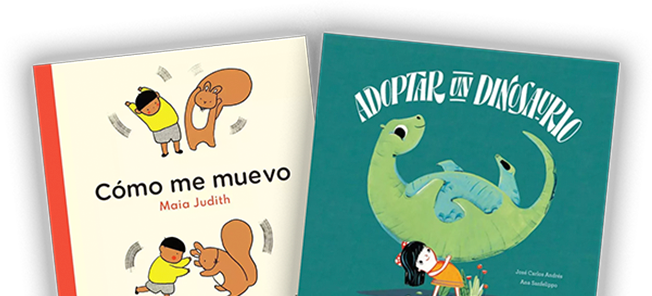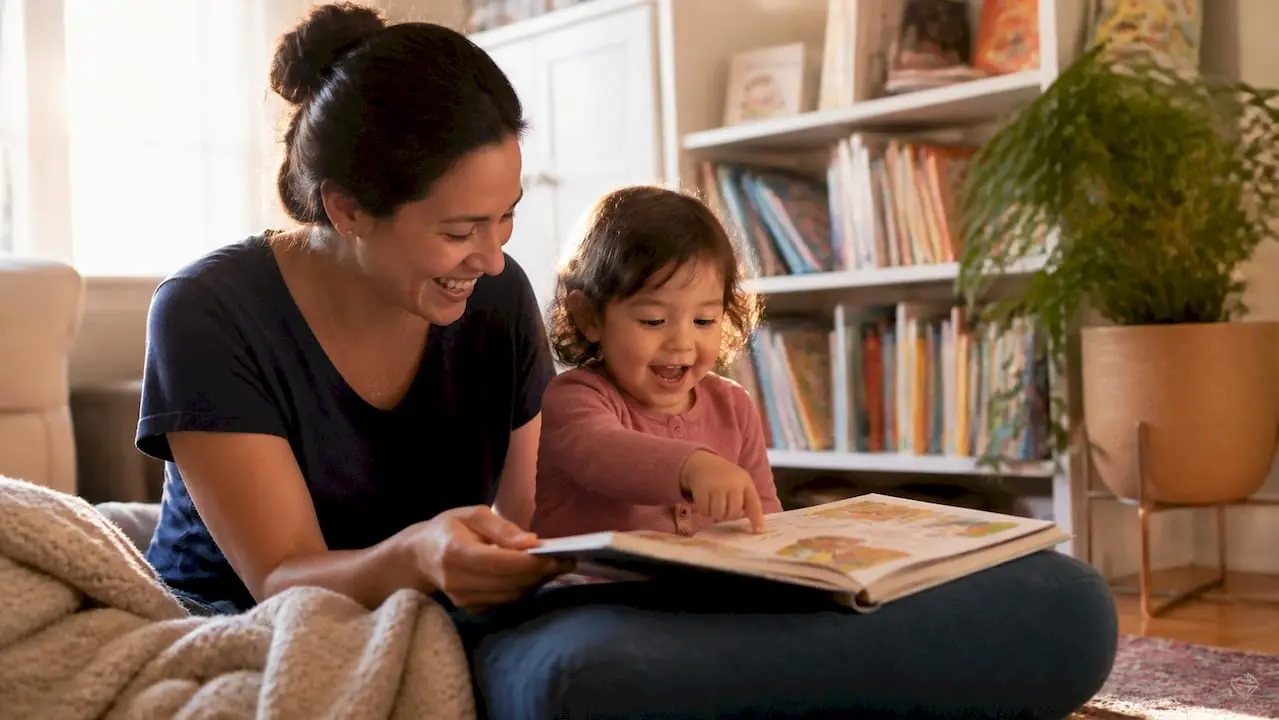
The fastest way to a great Spanish read aloud is one of three places: your local school or library's streaming collection, a handful of trustworthy YouTube channels with text on screen, and a short list of bilingual picture books built for reading out loud. Pick one recording tonight, watch it once yourself, then run a five to ten minute session with your child using a gesture or two and a repeated phrase.
Quick answers
- Animated videos with subtitles and live-recorded readings from schools give you full access to vetted content without copyright worries.
- Bilingual picture books with repetitive phrases or rhythmic patterns hold a young child's attention best during a read aloud.
- Songs, visual props, and open-ended questions raise participation more than the book alone does.
- Preview the recording first and plan two pause points, so the session is interactive rather than passive.
- A curated monthly box keeps a steady supply of age-matched books coming, which is what turns one good night into a habit.
On this page
- Where to find quality Spanish read alouds online
- Bilingual picture books that work aloud
- Storytime techniques that keep kids engaged
- Turning a recording into an interactive session
- How Sol Book Box turns this into a monthly habit
- Doing less, better
Where to Find Quality Spanish Read Alouds Online
You don't need a library card or a teaching degree to find a solid Spanish read aloud tonight. You need to know which format fits your kid, and where the reliable stuff actually lives.
YouTube is the fastest on ramp, but not every channel serves the same purpose. Animated videos with subtitles work best for early or beginning readers who benefit from seeing words match sounds in real time. Camera on book channels, where a narrator holds up the pages and reads slowly, work better for caregivers who want to pause, point, and ask questions. Storyteller led formats, where an adult performs the book with voices and expressions, tend to hold attention longest for kids three and under. Roundups like this guide to Spanish read alouds on YouTube cover several of these channel types, so it's worth sampling a few before committing to one as your go to.
Beyond YouTube, public school districts often host free, teacher recorded read aloud libraries that go criminally underused by families outside their zip code. Gwinnett County Public Schools' Spanish read aloud collection is a strong example: dozens of teachers reading picture books straight to camera, no ads, no algorithm pulling your kid toward something else after minute three.
A few things worth weighing before you pick a source:
- A full book upload lets you see every page and pause freely, but may raise copyright questions depending on the channel.
- Publisher hosted clips are cleaner legally but often show only excerpts, not the whole story.
- Library and school collections split the difference: full readings, vetted content, zero cost.
Bilingual Picture Books That Work Aloud
Not every good book reads well out loud. The ones that do tend to share a rhythm: repeated lines, a clear question to ask mid page, or a refrain kids start chanting before you finish the sentence. Here's a short, age sorted list to build a rotation from.
- "Diez Deditos / Ten Little Fingers and Toes" — a preschool staple built on rhyme and counting, ideal for the youngest listeners who respond to predictable sound patterns before they understand every word.
- "Los Pollitos Dicen" (traditional song book adaptations) — the classic "the chicks say" refrain turns into a group chant within one read, and pairs naturally with a puppet or clapping game.
- "¡Marimba! Animales A-Z" by Pat Mora — an alphabet book with strong percussion in the language itself, good for toddlers who respond to sound and rhythm more than plot.
- "Green Is a Chile Pepper / Verde es un Chile" by Roseanne Greenfield Thong — a color concept book with cultural specificity that gives K to grade 2 kids something to point at and name.
- "¡Vamos! Let's Go to the Market" by Raúl the Third — busy, detail packed illustrations that invite a scavenger hunt discussion rather than a straight read, great for restless six and seven-year-olds.
- "Dalia's Wondrous Hair / El Cabello Maravilloso de Dalia" by Laura Lacámara — a longer narrative with clear emotional beats, suited to kids who can sit through a full story arc and want to talk about it after.
When you're shopping, look for bilingual editions that show Spanish and English on the same spread rather than in separate sections at the back. That layout lets a non-fluent parent follow along in English while the child hears the Spanish, which matters more than most parents realize when they're building a rotation. School Library Journal's roundup of bilingual and Spanish picture books is a solid place to check reviews before you buy.
If you want titles that reliably earn a second reading, our list of funny Spanish and bilingual picture books is built around exactly that: books kids ask for again.
Storytime Techniques That Keep Kids Engaged
A book alone rarely holds a young child's attention for ten straight minutes. What works is a pattern: song, story, activity, repeat. Jose Luis Orozco's songs, like "Buenos Días" or "De Colores," are a go to for opening and closing bilingual storytimes because they introduce a handful of words through melody, and kids pick up melody faster than vocabulary lists.
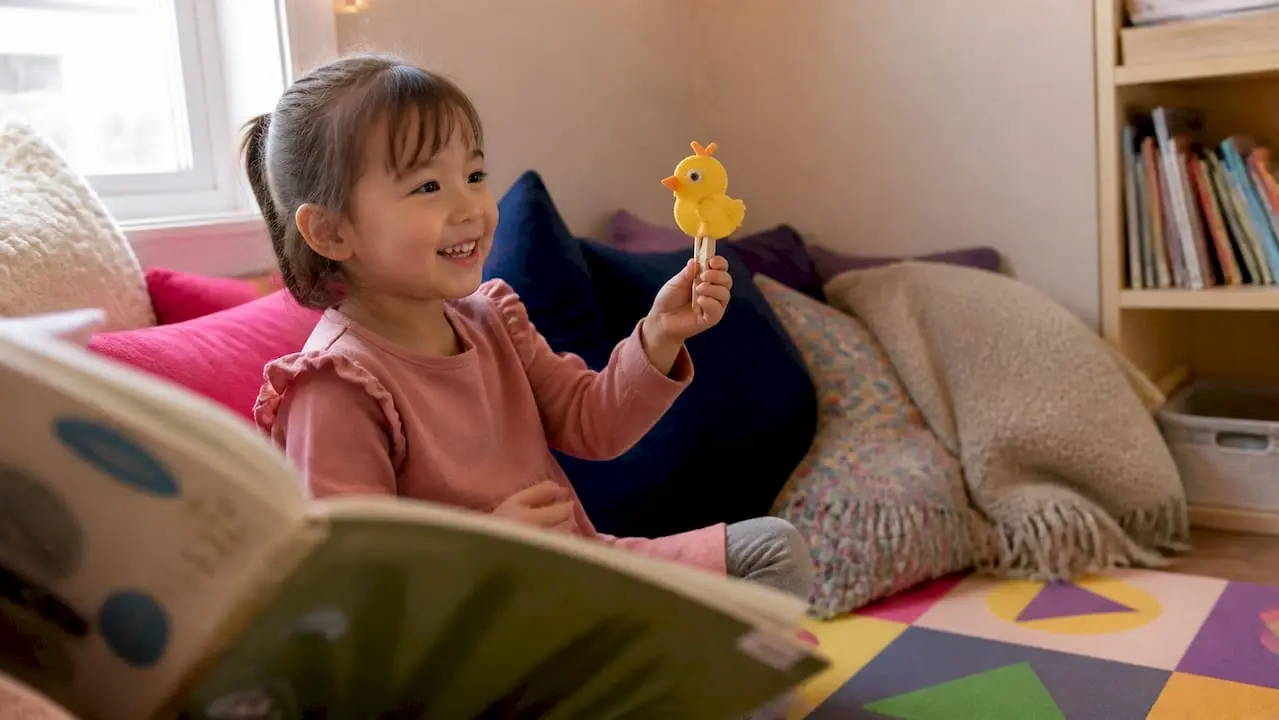
Simple manipulatives raise the stakes without raising the difficulty. Libraries running "Los Pollitos Dicen" often hand out clothespin chick puppets during the song, which does double duty: it keeps hands busy and builds fine motor skills at the same time.
If you're not fluent, don't skip the interactive parts. Dialogic reading, pausing to ask open questions like "¿Qué ves?" ("What do you see?"), works even when your own accent is shaky, as long as you pair the question with a gesture toward the page.
A few moves that consistently raise engagement:
- Sing an opening song every session so kids learn the routine, not just the words.
- Ask one open question per page instead of narrating straight through.
- Repeat a single target phrase three times across the session so it sticks.
- Use a prop, even a stuffed animal, to act out the refrain.
Pro Tip: Chain a short song, a five-minute read, and one physical activity into every session. That sequence, not the book alone, is what turns a single reading into something a child remembers and asks to repeat.
Turning a Recording Into an Interactive Session
Watching a recording alone isn't storytime. Turning it into one takes about two minutes of prep and a plan for what happens after the video ends.
- Preview the recording first. Five minutes on your own tells you where to pause, which words to repeat, and whether a simple prop (a toy animal, a scarf) fits the story.
- Run the short version (5 to 10 minutes) for toddlers: one song, the recording, one repeated phrase practiced together.
- Run the long version (15 to 20 minutes) for preschool and early elementary: opening song, the recording with two pause points for questions, a short activity, and a closing song.
- Adapt if you're not fluent. Turn on subtitles, repeat key lines slowly, and do a thirty second bilingual recap in English right after so nothing gets lost.
- Stick to licensed sources. Library and school hosted collections are built for this kind of reuse, so lean on those over reposted full books when you can.
If your child is at the stage where reading level starts to matter, our guide to choosing Spanish books for kindergarten breaks the options down by format and stage.
How Sol Book Box Turns This Into a Monthly Habit
Finding one great recording is a start. Building an actual reading habit is harder, and that's the gap Sol Book Box exists to close. Every month, subscribers get age matched Spanish and bilingual books, sourced globally rather than pulled from the same thin shelf most bookstores carry, along with parent guidance for reading them aloud.
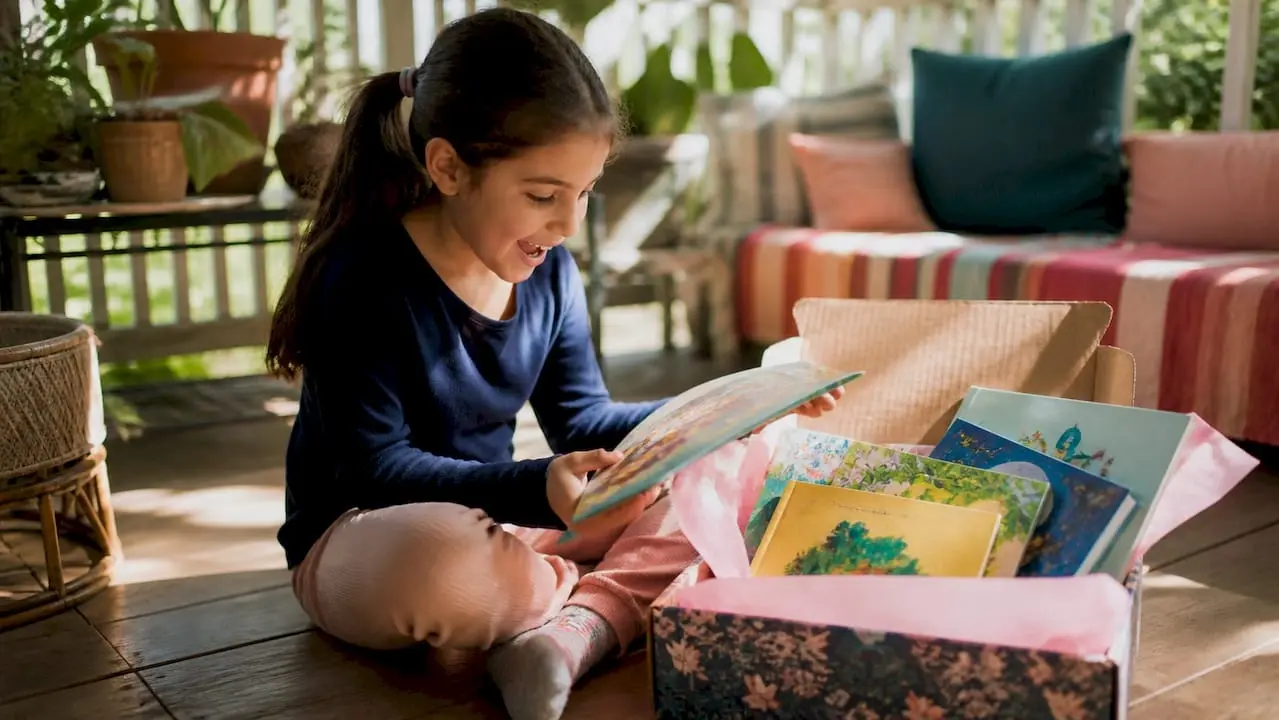
That curation matters because the real problem for most families isn't motivation, it's selection. Poorly translated books and shallow representation push a lot of well meaning parents right back to English. A curated box sidesteps that search entirely. Families with kids from birth to age eight, and teachers building a classroom library, tend to get the most out of it. If tonight's read aloud made you want a steadier supply, Sol Book Box is built to be that supply.
Doing Less, Better
Most advice on this topic pushes volume: more books, more channels, more structured curriculum before age five. The research on dialogic reading suggests something narrower works better. A single recording, watched with intent and paired with two or three repeated phrases, teaches more than an hour of passive video ever will.
The conventional wisdom oversells fluency as a prerequisite. It isn't. A parent who can't roll an "r" but asks "¿qué ves?" on every third page is doing more for their child's language development than a fluent speaker who reads straight through without pausing. Engagement beats accent, every time.
If you take one thing from this, prioritize consistency over expansion. Pick a small rotation of books and songs, repeat them until your child can predict the refrain, then expand. That's how the vocabulary actually sticks, not from novelty, but from repetition dressed up as a new adventure each time you read it.
Evening is where that consistency is easiest to protect, since the slot already exists. Our five-step Spanish bedtime routine lays out how to shape those ten minutes the same way every night.
Get Curated Spanish Read Alouds Delivered Monthly
Sol Book Box is the alternative to endless late-night YouTube searching for the next great Spanish story. Instead of hunting through mistranslated shelves or algorithm-driven playlists, you get a monthly box of vetted, age-matched Spanish and bilingual books, chosen by people who actually think about how a story sounds read out loud.
This fits naturally if tonight's session left you wanting a steady rotation instead of a one-off search. Families raising bilingual readers from birth through age eight, and teachers stocking a classroom shelf, get books wrapped and ready with parent guidance included, so the read aloud plan is already done before you open the box. Browse our boxes and start your subscription today.