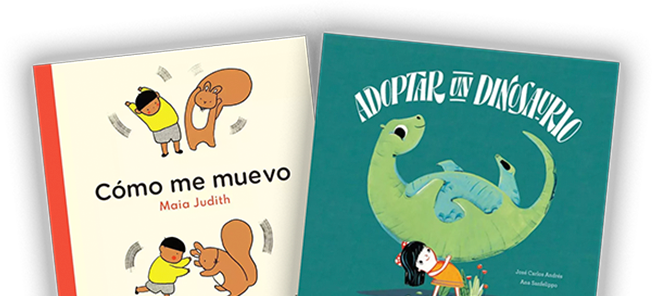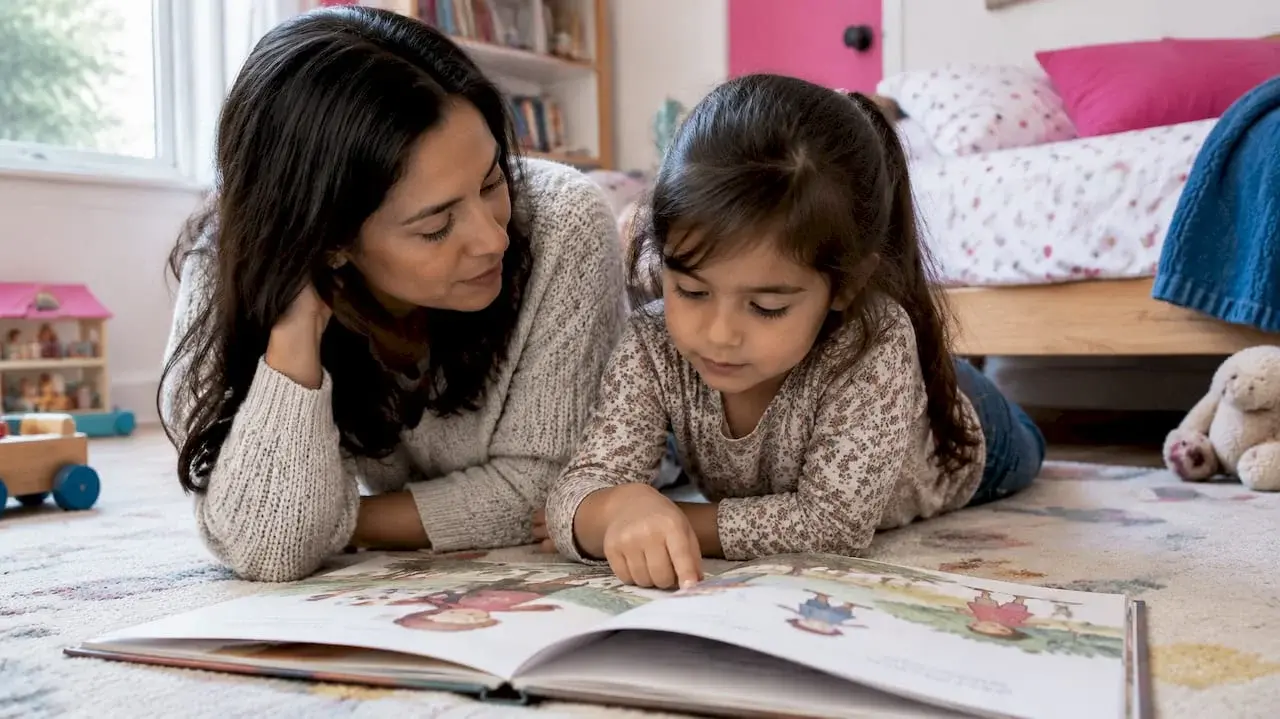
Your child groans when the Spanish book comes out. Maybe they go limp, or suddenly need water, or negotiate hard for the English one.
That groan is usually about something specific, and most of the specific things are fixable: a book with nothing to do with what they love, a session that has started to feel like a test, a routine that got too long. Keep it short, let them choose, pick something genuinely funny, and stop while they still want more.
Quick answers
- Resisting reading and struggling to read are two different problems. Work out which one you have before changing anything.
- Let your child pick the book. The Department of Education’s own family guidance says to choose by what the child is curious about.
- Ten minutes, alternating pages, and stop while they still want more.
- Match the book to what your child loves and to the Spanish they have so far. The age on the cover matters less than either.
- You do not need good Spanish to do this. Listening, rereading and asking open questions all count.
On this page
- Reluctant or struggling?
- Why Spanish reading earns its place
- Start with choice
- Make the sessions small
- Bring the story to life
- Let them see Spanish outside the book
- Build a routine, then be the example
- Choosing books a reluctant reader will open
- A two-week plan
- What if you do not speak much Spanish
- Questions parents ask
Reluctant or struggling?
A reluctant reader is a child who resists reading: they stall, sigh, negotiate or need coaxing every time. A struggling reader is a child who finds the mechanics hard. The two overlap more than we like to admit, because kids who find reading difficult often avoid it to dodge the feeling of falling behind. But plenty of reluctant readers read perfectly well and have no interest in doing it.
With Spanish there are extra layers. Your child may be in an English-dominant school and an English-dominant neighborhood, where Spanish is the language that is harder, less cool, or only used with abuelos. They may understand Spanish well and have never once seen it on a page in a way that felt fun. The Spanish books in the house may all be stiff translations, which children notice faster than we expect.
When a child says “I hate reading,” they are almost always telling you something more specific. Work out which of these sounds most like yours:
- It is too hard. They stumble on words, lose the thread, or feel embarrassed.
- It is boring. The books connect to nothing they care about.
- It feels like a test. Every session ends in questions, corrections or “say it again properly.”
- It loses to something better. Tablets, cartoons and sports are easier wins.
- It is tied to a bad memory. A frustrating school moment or a tense bedtime stuck.
Name the real reason first. The fix for boredom has nothing in common with the fix for fear of failing.
Why Spanish reading earns its place
It can feel easier to let Spanish reading slide when your child is already juggling English homework. We would gently push back on that. The skills a child builds reading in the language they think in carry over to the other one, so a half hour with a Spanish book is not borrowed from English reading. For a lot of kids it builds the same muscles.
There is a second payoff that is harder to measure. For a child who lives far from grandparents or from the country their family came from, a story set in a Mexican market or an Andean village is a doorway. Spanish stops being a school subject and starts being a place where people they recognize live.
So the aim is not a habit you enforce. It is making Spanish stories somewhere your child wants to go.
Start with choice
The single most reliable motivator is also the simplest: let your child pick. The Regional Educational Laboratory West, part of the Department of Education’s research network, tells families to ask what the child wants to read or learn about and to choose varied books on those topics. That guidance was written for families reading in Spanish.
Choice works best inside a frame. A curated shelf and a real vote:
- Put three or four Spanish books on the floor or the couch.
- Ask ¿Cuál quieres hoy? and honor the answer, even when it is the same book for the tenth time.
- Let them decide where to read: under a blanket, in the car, with a flashlight.
- Let them decide who does the voices.
Rereading is how children build fluency and confidence, so a favorite on repeat is doing its job. Even a parent who reads the language poorly can help by listening, encouraging the reread and asking open questions about the story.
Follow the obsession
If your child loves trucks, dinosaurs, princesses, soccer, slime or sharks, there is a Spanish book about it. Start there and leave the classics for later. A child who reads three pages about excavadoras with real interest is further along than a child who sits through a prize-winning story with glazed eyes.
This is where the shelf matters. The Spanish selection in most US stores is thin, and a lot of what is there was written in English first. A book written in Spanish by someone who grew up speaking it carries humor and rhythm that a translation tends to flatten, and children hear the difference even when they cannot name it.
Make the sessions small
What a reluctant reader needs is a better reading moment, not a longer one. Three habits do most of the work.
Keep it to ten minutes
Short wins beat long standoffs. Ten minutes with a smile is worth more than thirty with a fight. If your child is willing for five, take five and celebrate it. Next week, take six. Our five to ten minute storytime plans are built for exactly this.
Trade pages
You read a page, they read a page. Or you read the narration and they read the speech bubbles. With a toddler, you read and they turn the pages and point. Alternating keeps the load light and builds confidence without putting anyone in a spotlight.
Stop while they want more
This one feels backwards. While your child is still curious, close the book and say mañana seguimos. You want the last thing they feel each night to be enjoyment. Kids who leave wanting the next page come back on their own.
Skip the quiz
Resist the urge to test comprehension after every page. Swap quizzing for curiosity: ¿Qué crees que va a pasar? or ¿Cuál es tu parte favorita? Open questions invite a conversation. Closed ones feel like a pop quiz. And when your child mispronounces a word, let it go. Say it correctly yourself the next time it comes up and leave it at that.
Bring the story to life
A flat voice makes any book feel like homework. UNICEF tells parents to vary their tone and try different voices for different characters during read-aloud time. You do not need acting training. A gruff voice for the lobo, a squeaky one for the ratón, a whisper when it gets tense.
- Let them be the character. Hand a sibling or a stuffed animal a line to say.
- Use your hands. Act out the verbs: saltar, correr, dormir.
- Point at the pictures. Ask what is happening in them and let your child turn the pages, which keeps younger children in it.
- Make a series an event. Following one set of characters across several books gives a child something to look forward to.
Get libros they’ll pick up on their own.

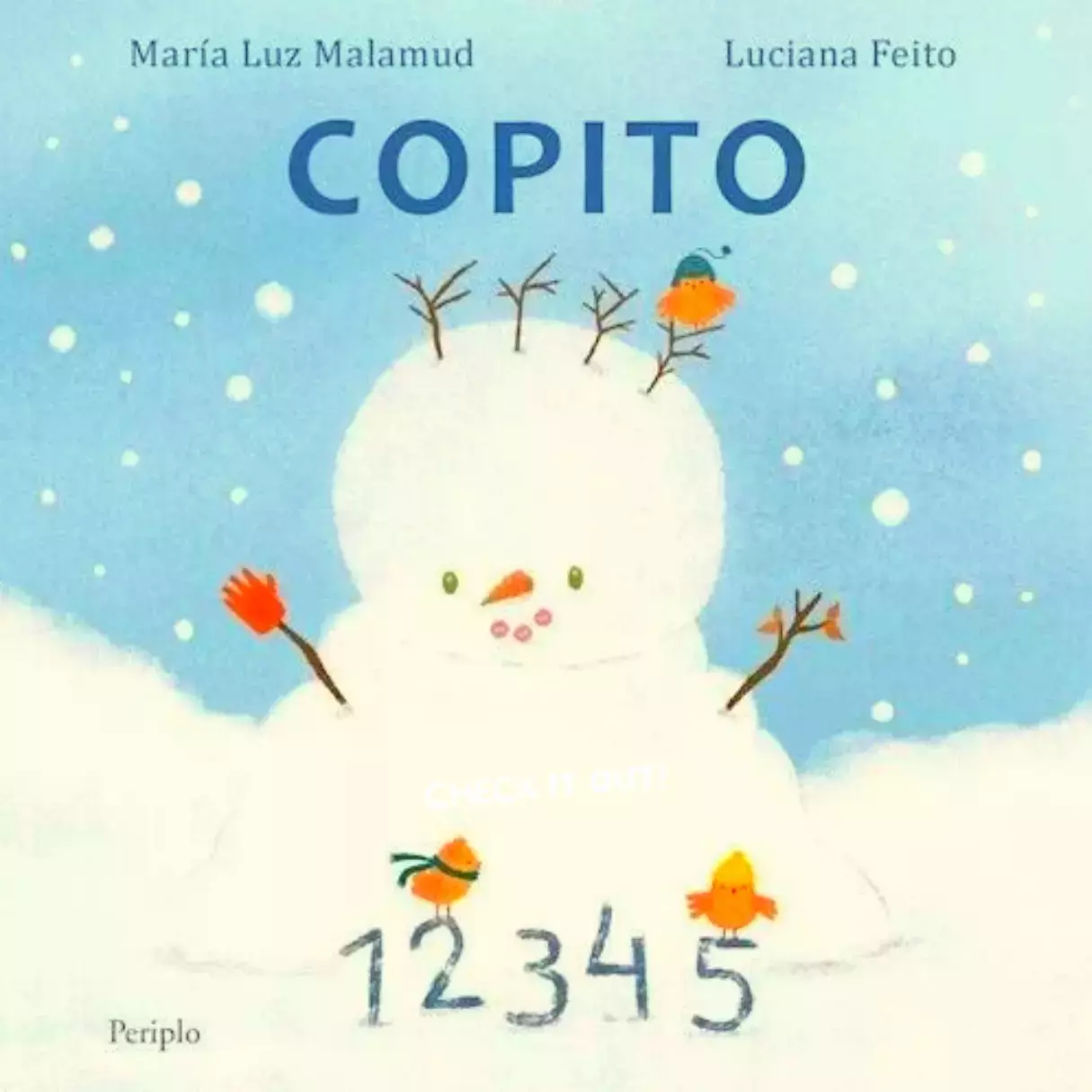
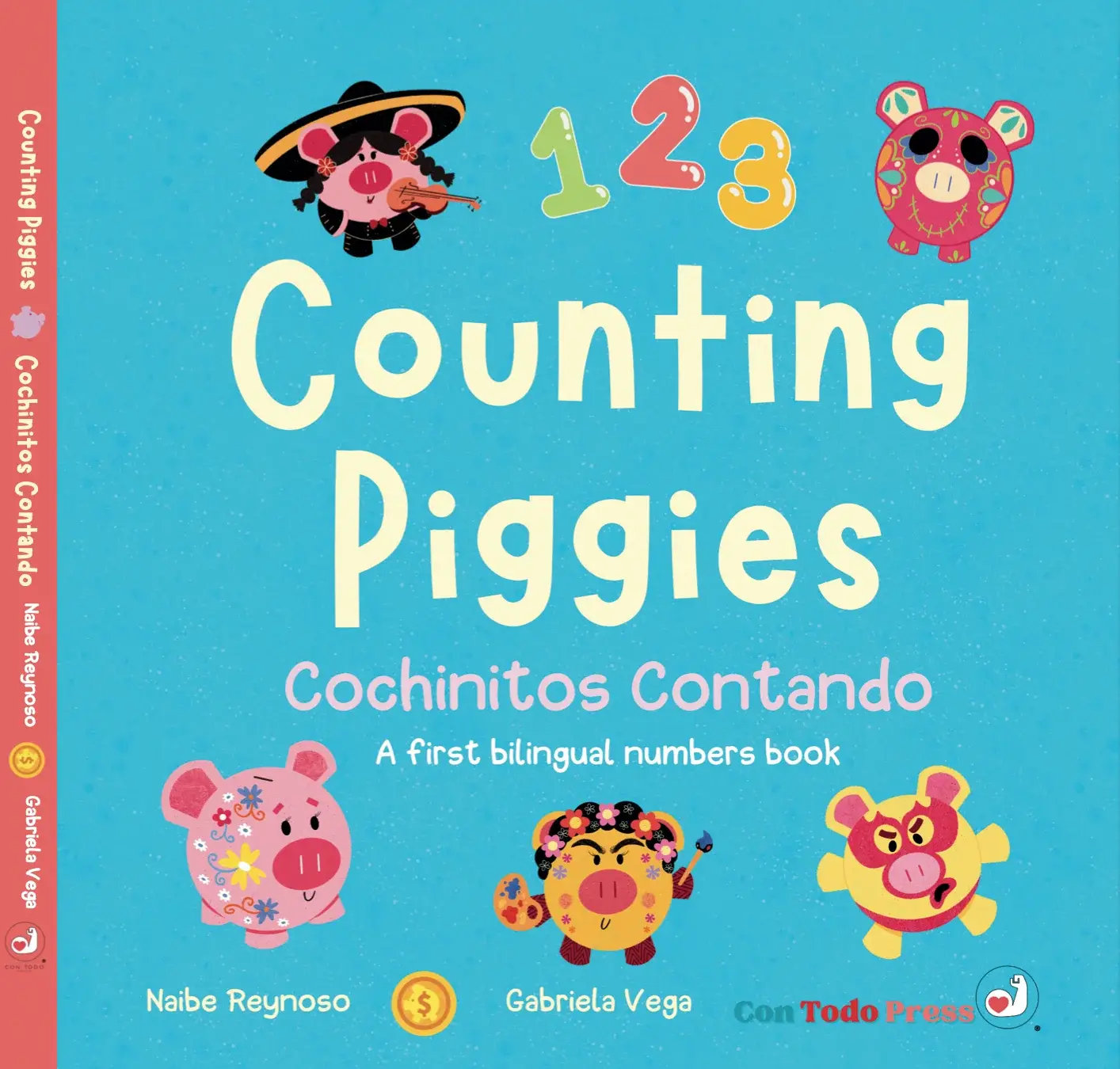
All three have been in past boxes.
Let them see Spanish outside the book
Sometimes the resistance comes down to “why bother?” The same Department of Education guidance recommends reading the words in the environment with your child: traffic signs, posters, logos, labels. Its own example is a child reading a movie poster out loud.
In a bilingual home this is a gift. Let your child be the translator at the grocery store. Ask them to read the label on the galletas. Write the shopping list in Spanish together. Put abuela’s recipe card on the fridge. When Spanish print turns up in ordinary life, it stops being a subject and becomes a tool the family uses.
Build a routine, then be the example
The American Academy of Pediatrics tells parents to read together at bedtime and keep books within easy reach, to pack a book instead of a tablet when you travel, and notes that children whose parents read are more likely to pick up a book themselves.
In Spanish, that looks like:
- Anchor Spanish to one moment. Most families pick bedtime. Our five-step Spanish bedtime routine is one way to do it.
- Keep a small basket in the car. Two board books beat a tablet in the back seat.
- Read your own book nearby. A magazine counts. If you are learning Spanish yourself, read a children’s book out loud and let them hear you try.
- Protect the time. When the night falls apart, shrink the session instead of skipping it.
Choosing books a reluctant reader will open
The right book does half the work. Here is what to look for when a child is digging their heels in.
Match the language stage, not the age
A six-year-old new to Spanish may enjoy the same simple, repetitive text as a toddler, and that is fine. Pair the text level with the child’s interests and a younger-looking book with a funny premise will feel more grown-up than a long one that drags. If you are weighing fully Spanish against bilingual text, our guide to choosing between Spanish and bilingual books lays out the tradeoffs.
What to try, by what you are seeing
They stumble and get embarrassed.
Try rhyming, repetitive board books, or bilingual text. Predictable patterns let a child predict, and predicting builds confidence.
They say it is boring.
Go straight to one favorite subject: animals, vehicles, food, soccer. Interest carries a child through words they do not know yet.
They resist being tested.
You read aloud and do the voices, and nobody asks a comprehension question. Takes the pressure off entirely.
They would rather have a screen.
Short sessions, a good place to read, and a series with characters who come back. Reading gets a ritual of its own.
Spanish feels like it is not for them.
Stories with kids who look and sound like yours, set where your family is from. That connects the language to who they are.
Look for authentic voices
Poorly translated stories sound strange, and children pick up on awkward rhythm quickly. Books written in Spanish by authors and illustrators from Spain and Latin America bring natural phrasing, wordplay and detail that a rushed translation flattens. A careful translation is a different thing and often a very good book; it is the careless ones that give the game away.
Use the world as a hook
A child who is lukewarm about “Spanish” may light up about a story set in Peru, Mexico City or Madrid. Geography is a gateway worth trying.
A two-week plan
If you want somewhere to begin, try this. Treat it as a nudge. There is no program to follow.
- Days 1 to 3: watch. Offer a few books and say nothing. Which one do they touch first? What makes them laugh?
- Days 4 to 7: ten minutes, their choice. Same time each day. Alternate pages. Stop while they want more.
- Days 8 to 10: add a voice. Character voices, a puppet, or a stuffed animal who only speaks Spanish.
- Days 11 to 14: connect it to life. Read a label, a menu or a recipe together. Ask what they would change about the ending.
After two weeks, watch for small things: they ask for a book, they bring one to you, they repeat a line. Those are the wins. “Loves reading” is not the bar.
One note on when to look further. If your child avoids reading in both languages, has trouble with letters and sounds, or shows real distress around it, talk to their teacher or pediatrician. A reading specialist can check for things that motivation alone will not solve.
What if you do not speak much Spanish
You can still do this. Hold the book, point at the pictures, say the words as best you can and let the illustrations carry the meaning. Books with audio or bilingual text give you a pronunciation guide. Learn alongside them, and let them watch you get it wrong sometimes. Your imperfect Spanish is enough for every part of this.
Questions parents ask
Is a reluctant reader the same as a struggling reader?
No. A reluctant reader resists reading; a struggling reader finds the skill itself hard. They overlap often, since a child who finds reading difficult may avoid it to escape feeling behind. Start by working out whether yours is bored, frustrated or just distracted, then adjust.
How long should a Spanish reading session be?
Ten minutes is a good target and five is fine to start. Alternate pages and stop while they still want more. A short, happy session builds the habit faster than a long, tense one.
Should I correct my child’s Spanish pronunciation while they read?
Mostly no. Constant correction turns reading into a test. Let the small errors go and say the word correctly yourself when it next comes up. Save direct feedback for when your child asks for it.
Can I help my child read in Spanish if I am not fluent?
Yes. Listening, encouraging a reread and asking open questions about the story all help, even when you read the language poorly. Bilingual books and picture-led stories give you extra footing.
Does reading in Spanish hurt my child’s English?
No. Reading skills built in one language carry across to the other, so time spent on Spanish books is not taken from English.
Start tonight with whatever is on the shelf, and let them choose it. If the shelf is the problem, our boxes are built to bring something new worth reaching for every month.