If you want your child to grow up with Spanish and you don't speak it yourself, bilingual board books are the easiest place to start. The English line on the page means you can read aloud from the first night, and at this age a baby is taking in rhythm and sound rather than judging your accent. Below are ten we'd start with for babies and toddlers, all short enough to read comfortably, plus how to match a book to your child's stage and the handful of reading habits that do the actual work.
Quick answers
- Bilingual board books put both languages on the same page, so a parent who isn't fluent can read aloud without losing the thread.
- For babies and young toddlers, look for short lines, repeated phrases, and art that carries the meaning on its own.
- Five or six books read over and over will do more than twenty read once.
- Alternate languages page by page rather than day by day — both languages beside the same picture builds the association faster.
- Your accent matters far less than your consistency. Babies absorb the sound of a language long before they evaluate how it's produced.
On this page
- Ten bilingual board books to start with
- How to read them when you're not fluent
- What to do when you don't know how a word sounds
- Matching the book to your child's stage
- Where to keep looking
- Frequently asked questions
Ten Bilingual Board Books to Start With
Every one of these is short, built for small hands, and simple enough to read aloud on a first try. What's worth noticing as you go is how differently they solve the same problem. One repeats a three-word refrain on every spread. One uses a sentence frame where only the last word changes. One puts a single word on the page and nothing else. One color-codes the two languages so you can see at a glance which line is which. One hides the Spanish inside instructions you have to act on. If one of those approaches clicks for your child, it's worth knowing which it was.
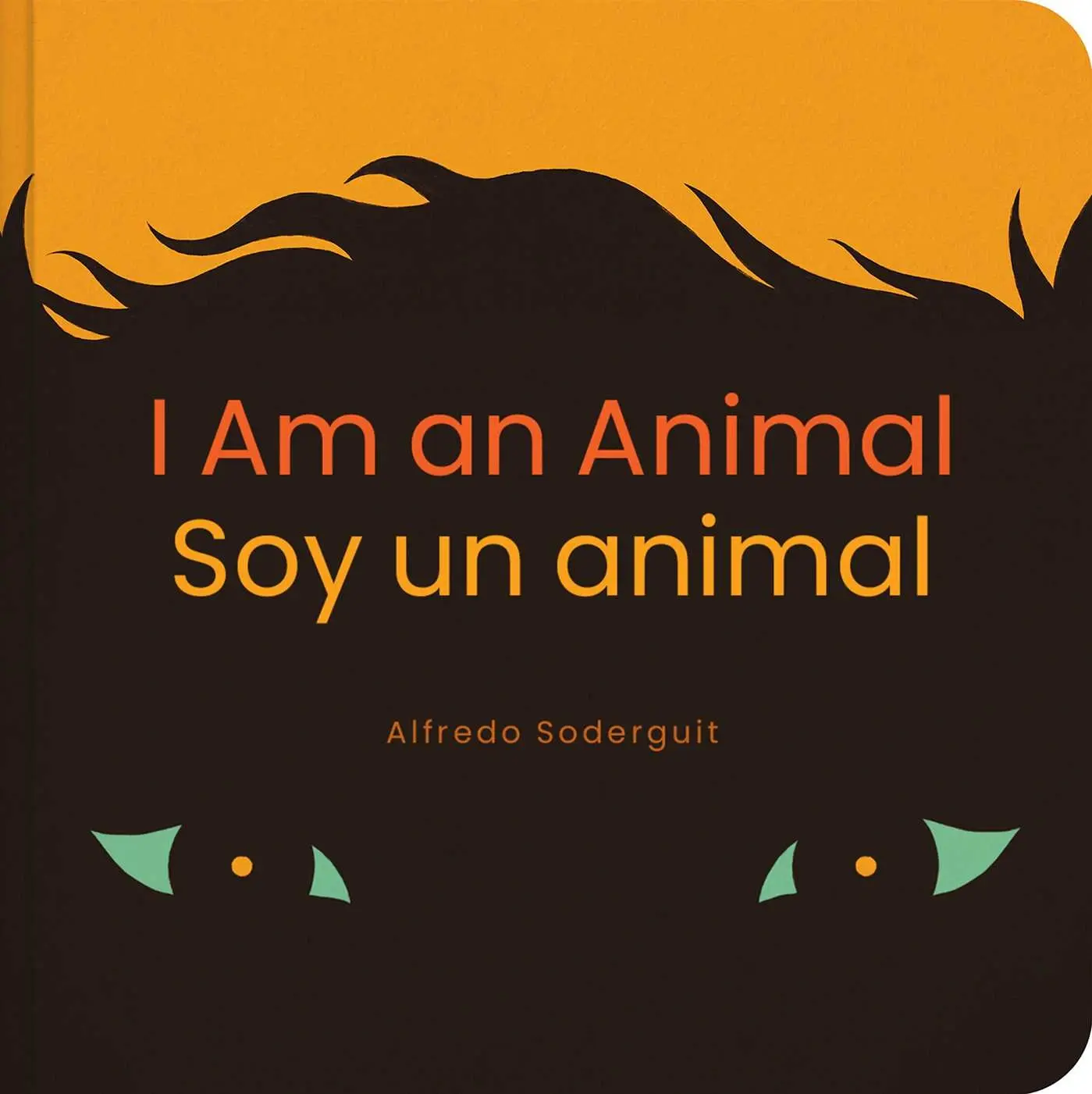
I Am an Animal / Soy un animal
by Alfredo Soderguit · Tra Publishing · ages 1–3
A few words per spread, facing two-tone illustrations of animals a baby will stare at. The English and Spanish lines sit stacked on the same page in different colors, so you can see at a glance which is which — a small design decision that makes a real difference when you're reading a language you're still learning. The premise underneath it is quietly lovely: all the things we turn out to have in common with the animals we share the planet with.
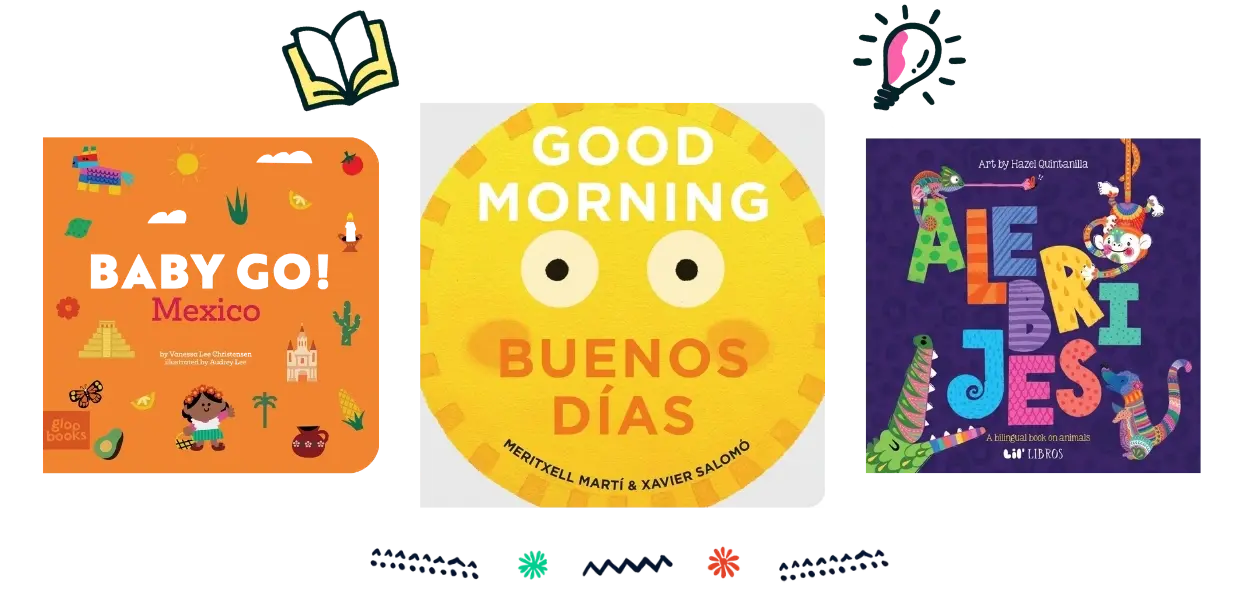
Alebrijes: Animals / Animales
illustrated by Hazel Quintanilla · Lil' Libros · baby to 3
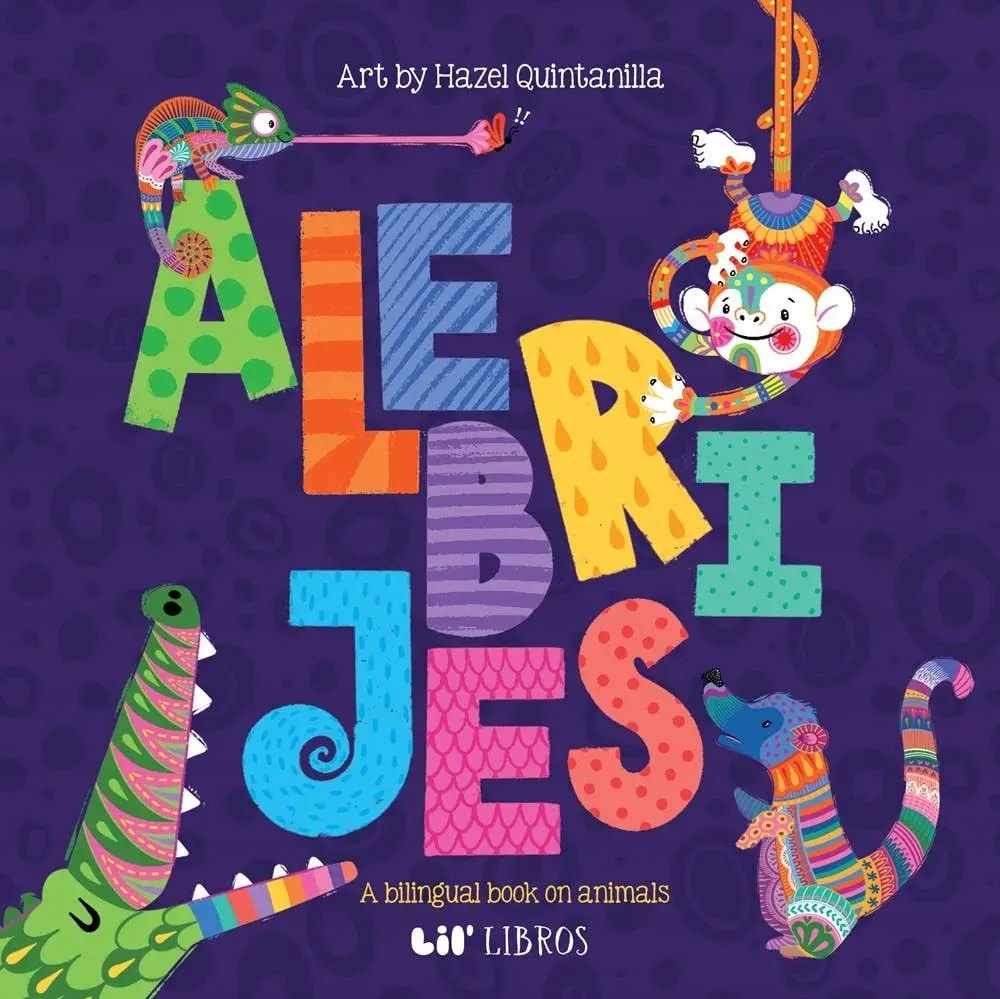
Twenty-two animals, one per spread, each drawn in the style of alebrijes — the brilliantly painted fantastical creatures of Mexican folk art, covered in patterns and impossible color. Every animal's name appears in large white type in English with the Spanish just beneath it, which means exactly one word to say per page. Several are near-identical across the two languages, and that's an easy first win for a beginner: capybara and capibara, caiman and caimán.
Besos for Baby: A Little Book of Kisses
by Jen Arena, illustrated by Blanca Gómez · LB Kids · baby to 2
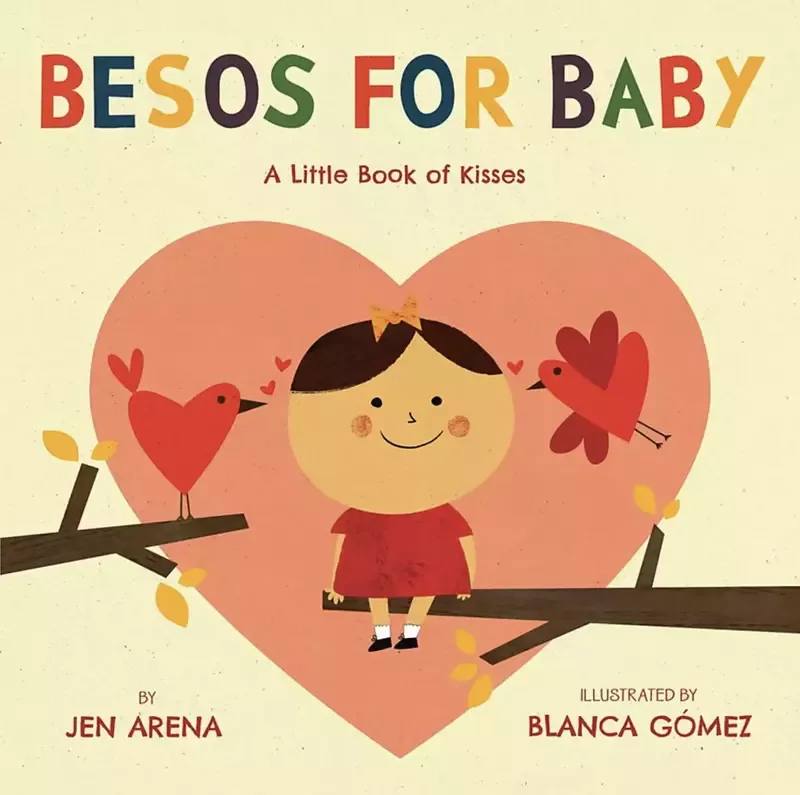
Every spread works the same way. A line of English on the left — Mommy loves kisses, sweet as can be — and a three-word Spanish refrain on the right: Besos, Mami, besos. Only the middle word changes as the kisses travel from mami to papi to the dog, the cat, and eventually the wind. There isn't much Spanish here, a dozen words or so across the whole book, and that's precisely why it works as a first one: there's no line long enough to get lost in, and a picture glossary at the back gathers the words up at the end. If it lands, it's the first of three — Sonrisas and Abrazos follow the same pattern.
Start their shelf today. We'll keep it growing.
Cancel anytime. We'll swap any book you already own.

Good Morning – Buenos Días
by Meritxell Martí, illustrated by Xavier Salomó · Gibbs Smith · baby to 3
Three words a page, and the same three words every time: Good morning, rooster. Buenos días, gallo. Only the last word changes as the house wakes up — an alarm clock, Dad shaving, the neighbors making coffee. Every spread has a tab to slide, so a toddler has something to do with their hands while you read, which tends to buy you a longer sitting. The sentence frame repeats so exactly that you'll have it after one reading and your child will be supplying the last word by the fourth. There's a companion, Good Night – Buenas Noches, for the other end of the day.

I Love You My Little Taquito / Te quiero mi pequeño taquito
by Naibe Reynoso, illustrated by Gabriela Vega · Con Todo Press · baby to 5
The longest text on this list, and the one where the grown-up gets as much out of it as the baby does. Each spread compares a child to something from the kitchen — a tamalito, a concha, a pupusa, a sopita de fideo — and lands every time on the same idea: perfect exactly as you are. The foods range across Latino kitchens rather than one country's, and the Spanish rhymes on its own terms instead of tracking the English word for word, which is a mark of real care in the adaptation. It's also why this is the one to read through once yourself before you read it out loud.

Loving Kindness / Bondad amorosa
by Whitney Stewart, illustrated by Rocío Alejandro · Barefoot Books · 12 to 36 months
Not a story but a set of small mindfulness exercises for toddlers, which makes it the most unusual book on this list. Each spread asks a question, gives an instruction, and lands on one bolded line in both languages: You can share happiness. Comparte la felicidad. That bolded phrase is the one to repeat, and it's short enough to say with confidence even on a night when you skip the lines above it. Part of the Niños mindful series, with a deliberately varied cast that includes children with different abilities.
Lucha Libre: Anatomy / Anatomía
by Patty Rodriguez and Ariana Stein, illustrated by Citlali Reyes · Lil' Libros · ages 0–4
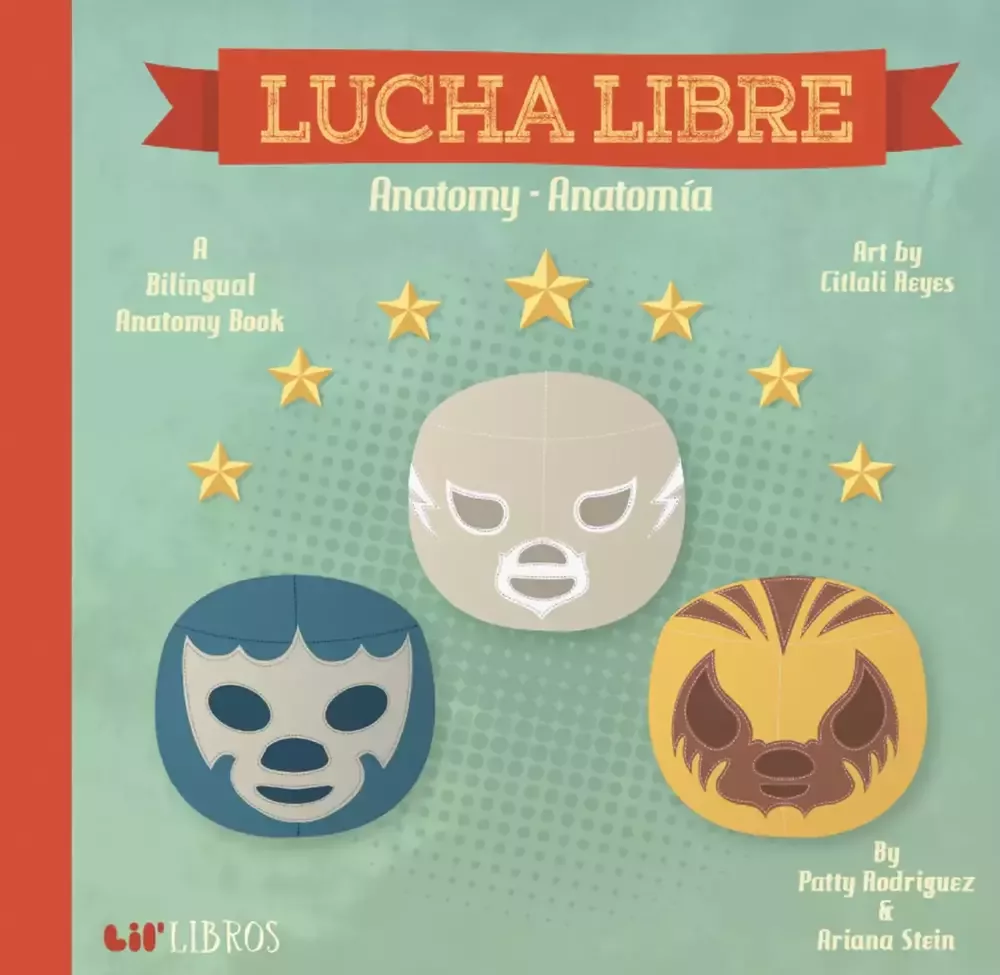
One body part per spread — eyes, arm, belly button — each announced in comic-book lettering across a masked luchador. English word above, Spanish below, nothing else on the page to read. It's the most useful kind of first vocabulary, the words you'll reach for a dozen times a day outside the book at bath time and getting dressed, and the payoff tends to arrive fast: a toddler pointing at their own head when you ask for it in Spanish.
Little Plants, Plantitas: A Bilingual Book About Emotions
by Naibe Reynoso, illustrated by Gabriela Vega · Con Todo Press
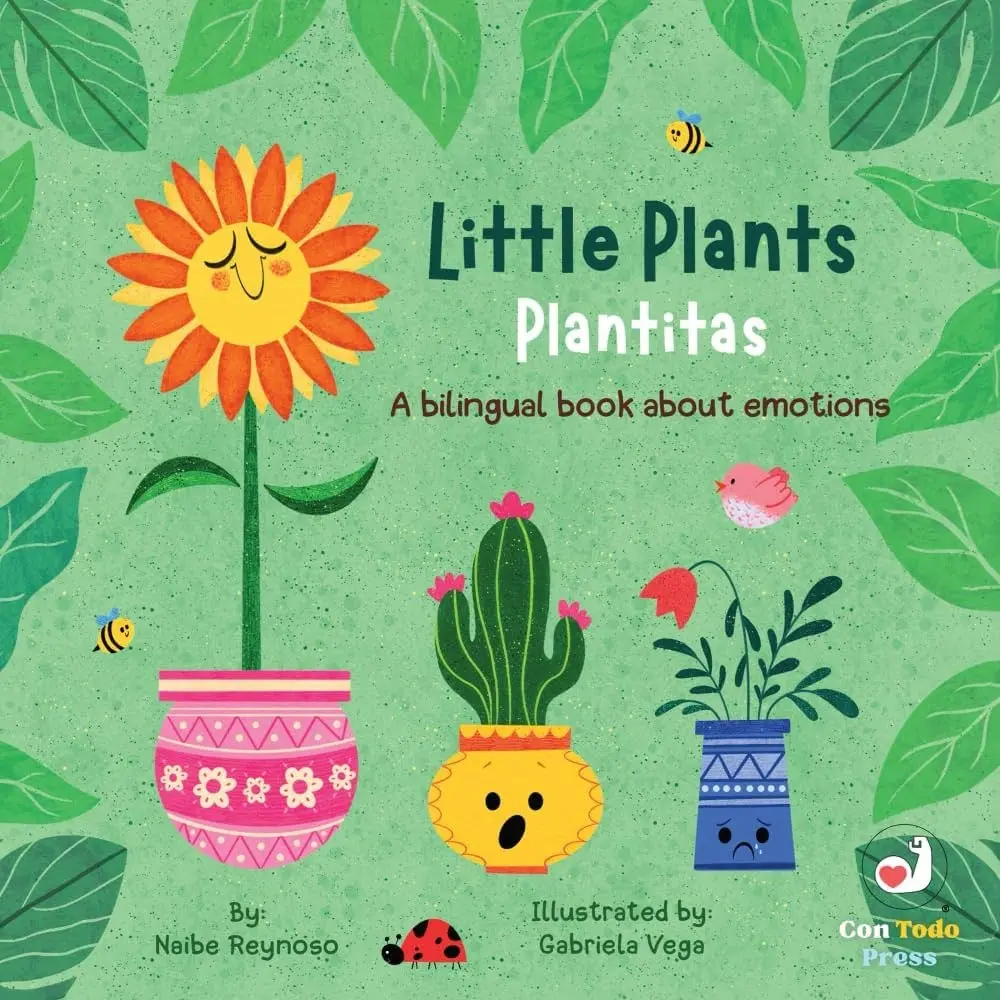
Each spread pairs a feeling with a plant — a sunflower for happiness, a fern for calm, a cactus for feeling strong — and splits the sentence across the page so the feeling comes first and the reason follows. Me siento fuerte… como un poderoso nopal que tiene una capa gruesa y raíces profundas. One word per spread is picked out in color, which tells you exactly which word to say twice. And the phrasing is first person, so what a child is picking up is how to say how they feel — worth having in both languages. Same author and illustrator as the taquito book above.
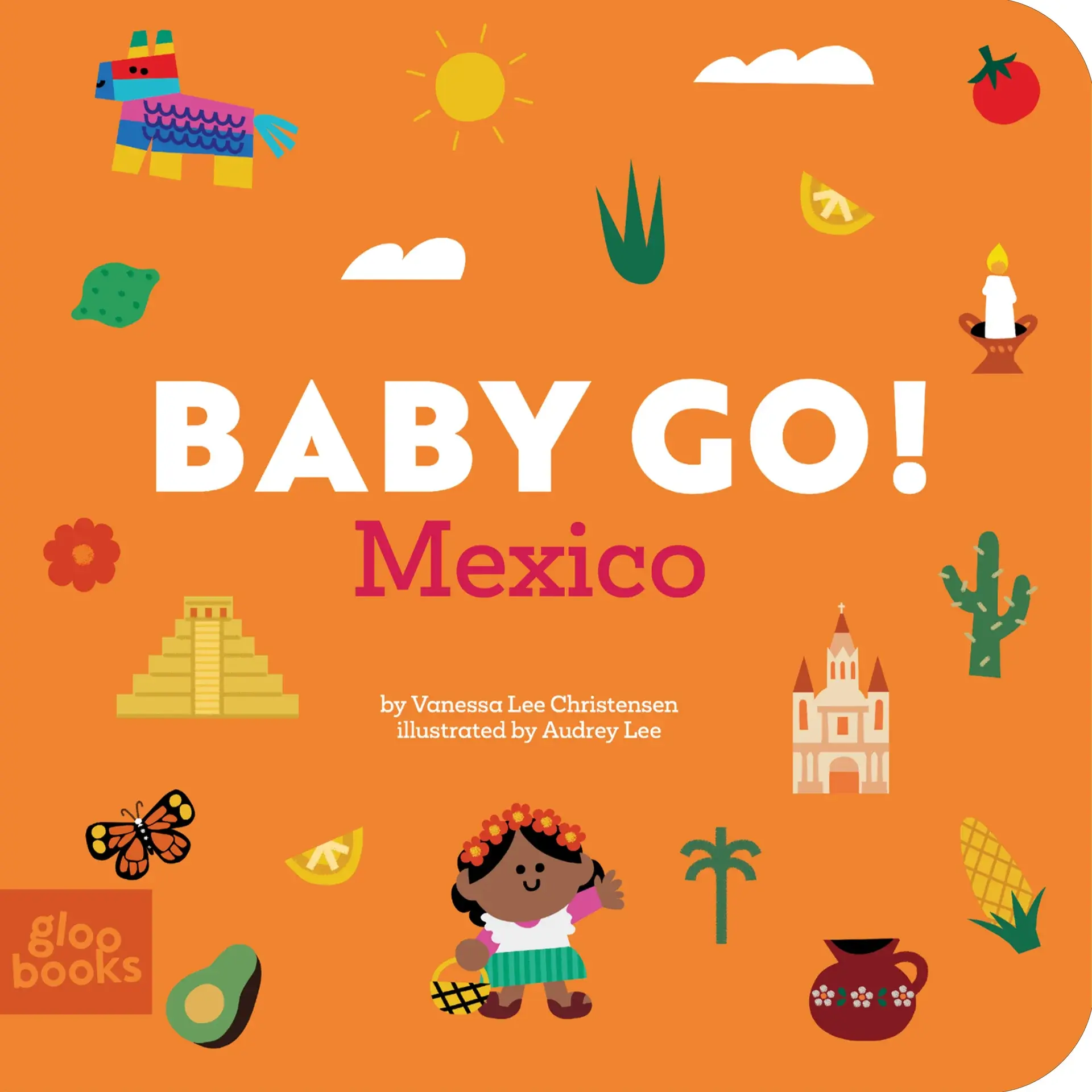
Baby Go! Mexico
by Vanessa Lee Christensen, illustrated by Audrey Lee · Gloo Books · ages 0–3
A concept book that happens to be a trip through Mexico. Baby sees shapes, and the shapes are Chichén Itzá, the painted doors of San Miguel de Allende, the sun stone at the Museo Nacional de Antropología. Baby counts, and the counting runs uno, dos, tres across corn, a jalapeño, a papaya. One thing to know going in: the sentences here are English with Spanish words set inside them rather than full lines in both languages, which makes this the lightest lift on the list — a good place to start if the others still feel like a stretch. Part of a series, so there are other countries if this one lands.
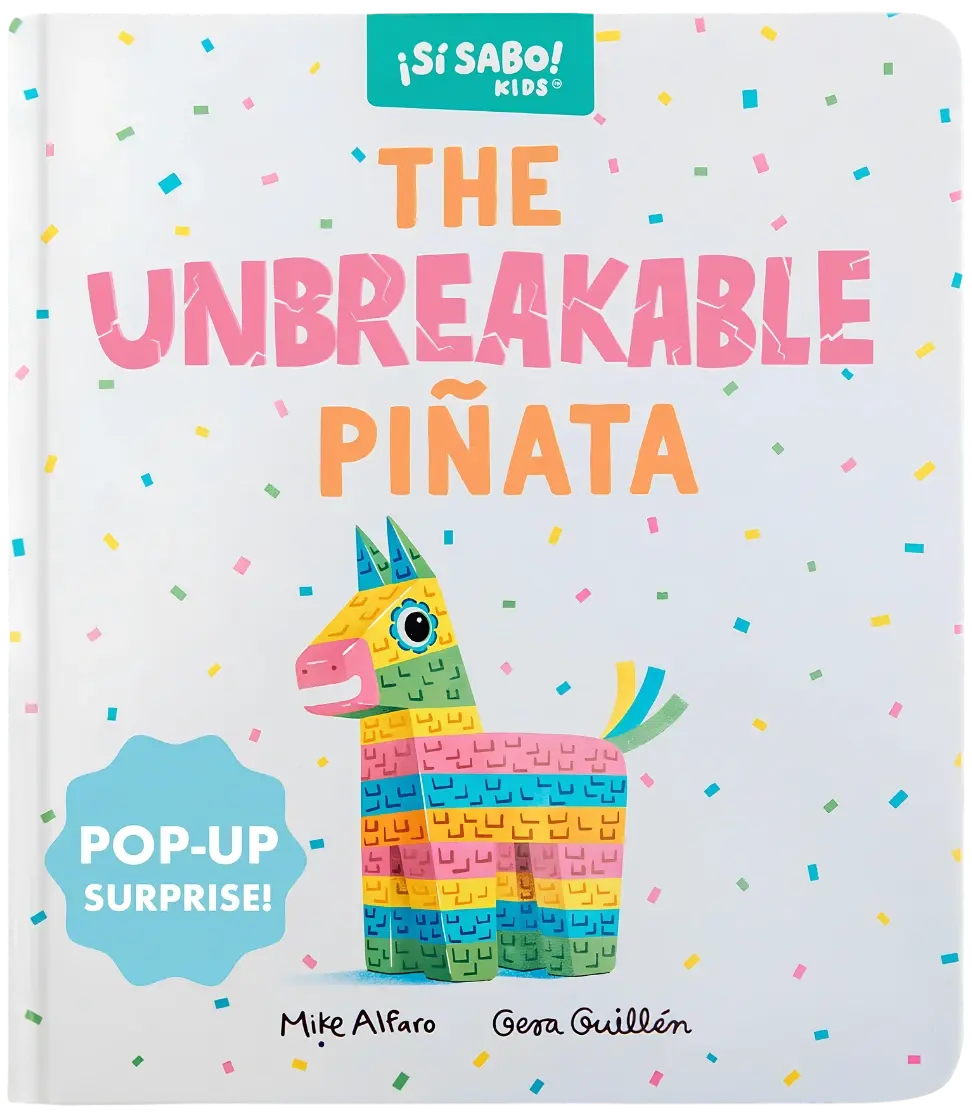
The Unbreakable Piñata
by Mike Alfaro and Gerardo Guillén · Blue Star Press · ages 3–5 · Sí Sabo Kids
The one to have waiting on the shelf. Shake it, clap it, blow on the page — every turn asks for a new trick to crack the piñata open, and it stubbornly refuses to break until a final pop-up bursts into candy and ¡BUM! The Spanish lives inside the instructions rather than beside the story, so you end up saying words in Spanish while you're busy doing something else, which is the easiest way anyone learns anything. Aimed a little older than the rest of this list, so it's the one your child grows into rather than starts with.
How to Read These Libros When You're Not Fluent
The book on the shelf teaches nothing. The habits around it do the work, and none of them require you to be fluent.
- Read the same book several nights running. Repetition is how a toddler moves a word from recognized to recalled, and it's how you get comfortable with the lines too.
- Point and label. Touch the picture of the pájaro while you say the word in both languages. One object, two words, no explanation needed.
- Alternate by page, not by day. Read the English line, then the Spanish line, on the same page. Both languages beside the same picture builds the link faster than an English day followed by a Spanish day.
- Add a gesture to anything that repeats. If a phrase comes back four times, give it a motion. Movement fixes a phrase in memory faster than sound alone.
- Take one word into the day. Pick a single labeled word each morning and find it around the house. A taza in the book becomes the actual cup at breakfast.
Progress won't look like fluency, yours or theirs. It looks like a toddler pointing at a dog on a walk and saying perro without being asked. If you want a routine to hang these habits on, our five-step Spanish bedtime routine takes about ten minutes a night.
What to Do When You Don't Know How a Word Sounds
This is the part that stops most parents, and it's worth saying plainly: an imperfect accent does not harm a child's Spanish. Children calibrate to the fluent speakers and recordings they encounter later. What they take from you at this age is that the language is normal, welcome, and part of home.
A few practical ways through it:
- Look up the words you're unsure of once, before bed, rather than mid-story. Forvo and Google Translate's audio both give you a native pronunciation in seconds.
- Let audio carry the words you can't. A recorded read-along or a song covers the pronunciation while you handle the pointing and the cuddling.
- Say it wrong and keep going. Stopping to correct yourself teaches a child that Spanish is a thing to get wrong; reading straight through teaches them it's a thing you do.
- Learn the handful of sounds that recur. Spanish vowels are consistent in a way English vowels are not, so five sounds will carry you a long way.
Our guide to Spanish read alouds goes further on running a session when you aren't fluent, including where to find recordings.
Matching the Book to Your Child's Stage
0 to 18 months
Thick pages a small hand can turn without help, bold high-contrast art, and single words rather than sentences. This is the age for labeled images, where a picture sits on the page and nothing competes with it. You are reading for sound and closeness, not comprehension.
18 to 36 months
Short phrases and repeated sentence patterns. Toddlers start noticing that words come back across pages, and a predictable rhythm is what lets them join in. This is the stage where a child starts finishing the line before you do.
Three and beyond
Board books start giving way to longer stories with a real plot. Our guide to picture books versus board books covers the transition, and for a reader heading into school, choosing Spanish books for kindergarten picks up from there.
What to check before you buy
- Read one page aloud in the shop or the preview. If you stumble, it's too much for right now — that isn't a failure, it's information.
- Check whether phrases repeat. A refrain a child can predict is worth more than a wider vocabulary they hear once.
- Look at how much of the meaning the art carries. At this age the picture should do most of the work.
- Check the back cover. Many bilingual board books include a short parent note on using repeated phrases at home, and that page is often worth more than the story.
Where to Keep Looking
- Colorín Colorado's bilingual board book list is built with classroom and home-education use in mind.
- Read Brightly's bilingual picture book roundup covers Spanish-English titles with a focus on story quality.
- Start With a Book offers broader literacy strategies that pair with any bilingual reading routine.
Frequently Asked Questions
Can I read Spanish books to my baby if I don't speak Spanish?
Yes. Bilingual board books put both languages on the same page, so you can follow the English while your child hears the Spanish. At this age children absorb the rhythm and sound of a language long before they evaluate pronunciation, and consistent exposure matters far more than a perfect accent.
When should I start reading Spanish books to my baby?
Whenever you like. There's no stage that's too early, and no reason to wait until English is established first. Infants take in the sounds of more than one language without confusion.
What are some of the best bilingual board books for babies?
For a first book, Besos for Baby and Good Morning – Buenos Días are the easiest to read aloud: both repeat a short phrase on every spread with only one word changing. Lucha Libre: Anatomy / Anatomía teaches body-part words you'll use a dozen times a day outside the book. Alebrijes puts a single animal name on each page, several of them nearly identical in both languages.
What counts as a board book?
Board books are printed on thick cardboard pages rather than paper, so a baby or toddler can turn them without tearing and handle them without help.
What are dual language books called?
Dual language books are usually called bilingual books, or side-by-side bilingual editions when both languages appear together on the same page.
Bilingual Libros, Chosen for You
Working out which bilingual board books are simple enough to read aloud, and good enough to read again, is its own small job. Sol Book Box sends a curated box of Spanish and bilingual libros matched to your child's age each month, chosen from publishers you won't find on a big-box shelf.