Understanding Spanish and reading Spanish are two different skills, and a child can have the first without the second. Games are one of the easiest ways to start building the other, because they turn a few minutes with Spanish words into something that feels like play.
These games work whether you are fluent, learning Spanish right alongside your child, or somewhere in between. The best ones are simple enough to start today with an index card and a few minutes: labeling objects around the house, hunting for clues written in Spanish, building words from syllables, and turning a read-aloud into a guessing game. Add a couple of free apps for variety, and you have a full toolkit for ages 0 to 8.
TL;DR
- Start physical and tiny. Labels on furniture, clue hunts and movement games work for ages 3 to 6 and need only index cards and a marker.
- Match the game to the reading stage. Word searches and picture matching suit beginners. Crosswords and word-building games suit older kids who already know a lot of Spanish.
- Screens are an add-on. A few free apps and online games exist, but check age ratings, ads and data collection before your child plays.
- Pair every game with a real book. A game builds the skill. A story gives your child a reason to use it.
- Keep sessions short. Five to ten minutes, a few times a week, beats one long Saturday session.
On this page
- What a Spanish reading game practices
- Games for toddlers and babies (ages 0 to 3)
- Games for preschool and kindergarten (ages 3 to 6)
- Games for early elementary (ages 6 to 8)
- Quick comparison: which game, which age, what it needs
- Online games and apps: free options and what to check
- Make the games part of your week
- FAQ
- Sources
What a Spanish reading game practices
A reading game is any playful activity where your child has to look at Spanish print, make sense of it and respond. That can be as quiet as a word search or as loud as a scavenger hunt. What matters is which skill it trains, because different games build different muscles.
According to one set of Spanish reading games for kids, word searches train children to spot Spanish words, Scrabble-like games ask them to form words, and crosswords require focus and vocabulary. The same guide notes that reading aloud practices rhythm and punctuation. Word puzzles built around stories, such as word searches, crosswords, fill-in-the-missing-letter and match-the-words, strengthen spelling, memory and word recognition, and visual learners tend to love them.
A simple way to think about it:
- Letter and sound awareness: beginning-sound puzzles, alphabet bingo, flip books.
- Word recognition: labeling, picture-and-word matching, word searches.
- Decoding: syllable blending, sound-it-out games.
- Fluency: reading aloud, echo reading, partner reading.
- Comprehension: story games, clue hunts, questions about a picture book.
Spanish helps you here. It is a highly phonetic language, and it works well with syllables. Children can sound out the first syllable, then the second, and blend them. That is easier than stringing together a long run of single letter sounds. Most of the games below lean on that strength.
Games for toddlers and babies (ages 0 to 3)
At this age nobody is decoding yet. The goal is to connect Spanish sounds, pictures and print with warm, playful time together. Think of it as planting seeds.
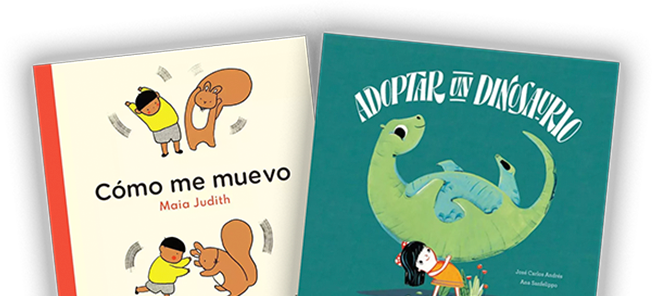
Point-and-name board books. Pick a sturdy board book with one big picture per page. Say the word in Spanish, point, and let your toddler slap the page or lift the flap. Next time, pause and let them "say" the word first, even if it comes out as a happy babble. Our Board Book Box is built around exactly this stage.
Funny voices and repeat-after-me. Read the same line three ways: whispering, singing and in a monster voice. Repetition is the whole point. Babies and toddlers love hearing the same sounds again and again, and it builds the ear that later reading depends on.
Memory-card talk. A simple matching game turns into speaking practice when the child says the word before keeping the card. One Spanish learning resource gives the example of a child saying "el perro" before keeping the card. You can do the same with a puzzle: say "Busca la casa" and let your child find the piece.
Touch and move. Call out a color in Spanish and let your toddler run to touch something that color. The Open University's learning platform describes this touch-the-color game and explains that movement activates parts of the brain tied to memory, which can help vocabulary stick faster than flashcards.
For longer, ready-made routines, our Spanish read-aloud storytime plans fit into five to ten minutes.
Games for preschool and kindergarten (ages 3 to 6)
Now your child is noticing letters and is starting to link print to meaning. These games are playful, physical and need almost no equipment.
Label the house
Write a short two-syllable word on an index card, such as sofa, cama or caja. Show it to your child, read it together, and let them stick it on the object it names. This labeling game comes from a bilingual parenting blog that points out how well short Spanish words break into syllables.
Tips to make it work:
- Start with five labels, not fifty.
- Choose words your child already says out loud.
- Once a label is easy, take it down and swap in a new one.
- Let your child write a label for you. Your mistakes are very funny at this age.
The clue treasure hunt
Hide five to seven clues around the house. Start with very short phrases like en tu cama (in your bed). As your child grows more confident, move to longer ones like la pista está en tu armario (the clue is in your closet). The same blog describes this treasure hunt progression, and it works because your child has to read to win. The last clue can lead to a book, a snack or a blanket fort ready for storytime.
Move to the words
Assign a movement to each word: hop for perro, spin for gato, shake your arms for libro. This "Spanish dance" idea is also described by the Open University's learning platform. Show the card, your child reads it and does the move. Kinesthetic learners often remember words much better this way.
Beginning-sound play
Sort picture cards by first sound, play alphabet bingo, or build a beginning-sounds puzzle. A set of Spanish alphabet activities lists ideas like initial-sound puzzles and mats, sound strips, alphabet bingo, pizza puzzles and "I have, who has" games. You can make a cheap home version with magnets, paper plates or sticky notes.
Word searches, the gentle way
For kindergartners, the Spanish word-search advice is to use horizontal, forward-reading, medium-length words. Keep the grid small and use words from the book you read this week. Let your child circle with a fat crayon.

Games for early elementary (ages 6 to 8)
Now your child is decoding real sentences. The goal shifts from recognizing words to reading smoothly and understanding what they read.
Syllable blocks. Write syllables like ma, sa, pe, lo on cards or blocks. Ask your child to build as many words as possible: mesa, pelo, sapo. Add a point for each real word and a bonus for a silly one.
Sentence-building cards. Print or write cards with high-frequency words and ask your child to arrange them into a sentence, then read it out loud. Printable sentence-building cards and picture-match reading activities are a classic way to build confidence. Picture match is especially nice: your child matches a picture to a two-sentence description.
Crosswords and word searches, level up. For elementary-age children, the guidance is short and medium-length words, both horizontal and vertical, reading forward. Crosswords come later, since the clues take real vocabulary. Colorín Colorado suggests Spanish word search and crossword books, along with activity books, flash cards and board games, as home resources.
Partner reading. Take turns: you read a page, your child reads the next. Or read a page in Spanish, then ask your child to tell you what happened in English, or the other way around. Colorín Colorado recommends taking turns reading aloud and reading in one language before the other as ways to include Spanish in shared reading.
Story detective. After a picture book, ask three questions: ¿Quién? ¿Dónde? ¿Qué pasó? Let your child find the sentence in the book that proves each answer. It turns comprehension into a hunt. For books that open those conversations about feelings, try our SEL read-aloud toolkit.
Quick comparison: which game, which age, what it needs
Point-and-name board book
Best age: 0 to 3 · Builds: vocabulary, listening · Needs: a board book
Touch-the-color
Best age: 2 to 5 · Builds: color words, listening · Needs: your living room
Label the house
Best age: 3 to 6 · Builds: word recognition · Needs: index cards, marker, tape
Clue treasure hunt
Best age: 4 to 7 · Builds: reading short phrases · Needs: paper clues
Beginning-sound bingo
Best age: 4 to 6 · Builds: letter sounds · Needs: printable or homemade cards
Word search
Best age: 5 to 8 · Builds: spotting words, spelling · Needs: printable grid
Syllable blocks
Best age: 5 to 8 · Builds: decoding, blending · Needs: cards or blocks
Sentence building
Best age: 6 to 8 · Builds: grammar, fluency · Needs: word cards
Story detective
Best age: 5 to 8 · Builds: comprehension · Needs: a picture book
Crossword
Best age: 8 and up · Builds: vocabulary, focus · Needs: clue puzzle
Age ranges are a guide. A heritage speaker who hears Spanish daily may jump ahead in speaking while still learning to read, and that is completely normal.
Online games and apps: free options and what to check
Some families want a screen option for car rides or a rainy afternoon. There are good free choices, and a few things to check first.
Free public media games. A public broadcasting roundup of free Spanish resources describes Oh Noah! as an online game for children learning Spanish, with four games that teach simple vocabulary, including up, down, right and left, plus a search-and-find game. The same list mentions a free online read-aloud program with six stories in Spanish and printable pages to color afterward.
Free games from schools and counties. Some local programs give families free access. For example, Napa County's education office provides a literacy app with e-books and learning games in English and Spanish free to parents of preschool through third-grade children who live in the county. Ask your local school district or library whether something similar exists near you.
Apps for children who already speak Spanish at home. If your child understands Spanish but has never learned to read it, look for tools that teach reading through syllables, the way many schools across Mexico and Latin America do. One such app lists 114 lessons in four phases, illustrated books and a parent dashboard, for ages 3 and up.
Subscriptions. Not everything is free. One reading app for ages 5 to 10 offers Spanish practice subscriptions for up to two children in 3-, 6- or 12-month packages. Always read the store listing for what is included before you sign up.
A short privacy and quality checklist
Before a child plays any app, take two minutes:
- Age rating: does the store rating fit your child?
- Ads and tracking: the listing for one Spanish reading app states no ads or tracking and COPPA compliance, which is the kind of detail worth checking for yourself before trusting it.
- Data collected: the same listing says contact information such as name and email may be collected. Read what an app asks for.
- Accessibility: some listings note that the developer has not indicated supported accessibility features. If your child needs those, check the listing for each app.
- Language quality: play a level yourself. Spanish should read naturally, with correct accents and sensible phrasing. That's the same bar we hold our own books to.
Make the games part of your week
Games work best as a small, regular habit. A few ways to keep it going:
- Pick a daily slot. Five minutes after breakfast or just before bed. Our five-step Spanish bedtime routine shows how to wind down with a story.
- Play first, read second. Start with a two-minute game using words from tonight's book, then read the book. Your child already knows the tricky words and feels like a star.
- Let your child be the teacher. Kids love catching a grown-up's mistake. Read a label wrong on purpose.
- Keep the simple stuff. The best Spanish games kids enjoy are usually simple, and a toy kitchen becomes a conversation when a child asks for agua, pan or fruta, as one Spanish learning blog observes.
- Invite the whole familia. Grandparents can play bingo over video call. Older siblings can run the clue hunt.
If you are raising a heritage speaker, keep speaking Spanish at home. Colorín Colorado notes that doing so supports bilingualism, family ties, identity and literacy in both Spanish and English. Games are one more way to say: this language is ours, and it is fun.
Not sure whether to start with all-Spanish books or bilingual ones? Our guide to choosing between Spanish and bilingual kids' books walks you through it. And for a change of scenery, travel the world with Spanish children's books gives you ideas for turning a story's setting into a map game.
Keep the games going with real books.
FAQ
What is the easiest Spanish reading game to start with?
Labeling the house. Write short two-syllable words like sofa, cama or caja on index cards and let your child stick them on the matching objects. It takes five minutes to set up, costs nothing and works for most children from about age 3.
Are there free Spanish reading games for kids online?
Yes. Public media sites offer free online games and read-aloud stories in Spanish, and some local education offices give families free access to bilingual literacy apps. Many other apps have a free tier with paid upgrades, so read the store listing for costs before downloading.
How do I play Spanish reading games if I do not speak Spanish well?
Play games where the cards, book or app carries the Spanish, such as labels, picture matching and bingo. Read the words together, and let your child's curiosity lead. Bilingual books, with Spanish and English side by side, give you a safety net while you learn along with them.
Which games are best for a child who speaks Spanish but cannot read it yet?
Syllable-based games work especially well, because Spanish letters map closely to sounds. Try syllable cards, word-building with blocks and short clue hunts, then read picture books together every day so new words appear in context.
How long should a reading game session last?
Five to ten minutes is plenty for most children under 8. Stop while your child still wants more, and come back tomorrow. Short, regular play builds the habit better than a long session once a week.
Sources
- 7 Spanish Reading Games for Kids: Boosting Literacy Skills
- Teaching Kids Spanish Vocabulary (OLCreate, The Open University)
- Fun Labeling Activities To Practice Spanish Reading With Kids (Becoming Bilingual)
- Comligo Spanish: Best Spanish Learning Toys and Games for Kids
- Spanish Alphabet Activities (Bilingual Classroom Resources)
- Supporting Spanish at Home: Resources for Families (Colorín Colorado)
- Spanish Reading for Kids: Steps to Success (Spanish Playground)
- 10 Free Spanish Apps and Games for Children and Parents (PBS SoCal)
- Digital Early Learning: Footsteps2Brilliance (Napa County Office of Education)
- ¡Ya Leo! App (App Store)
- eKidz.eu: Languages made easy (App Store)